



What We’re Watching This Week
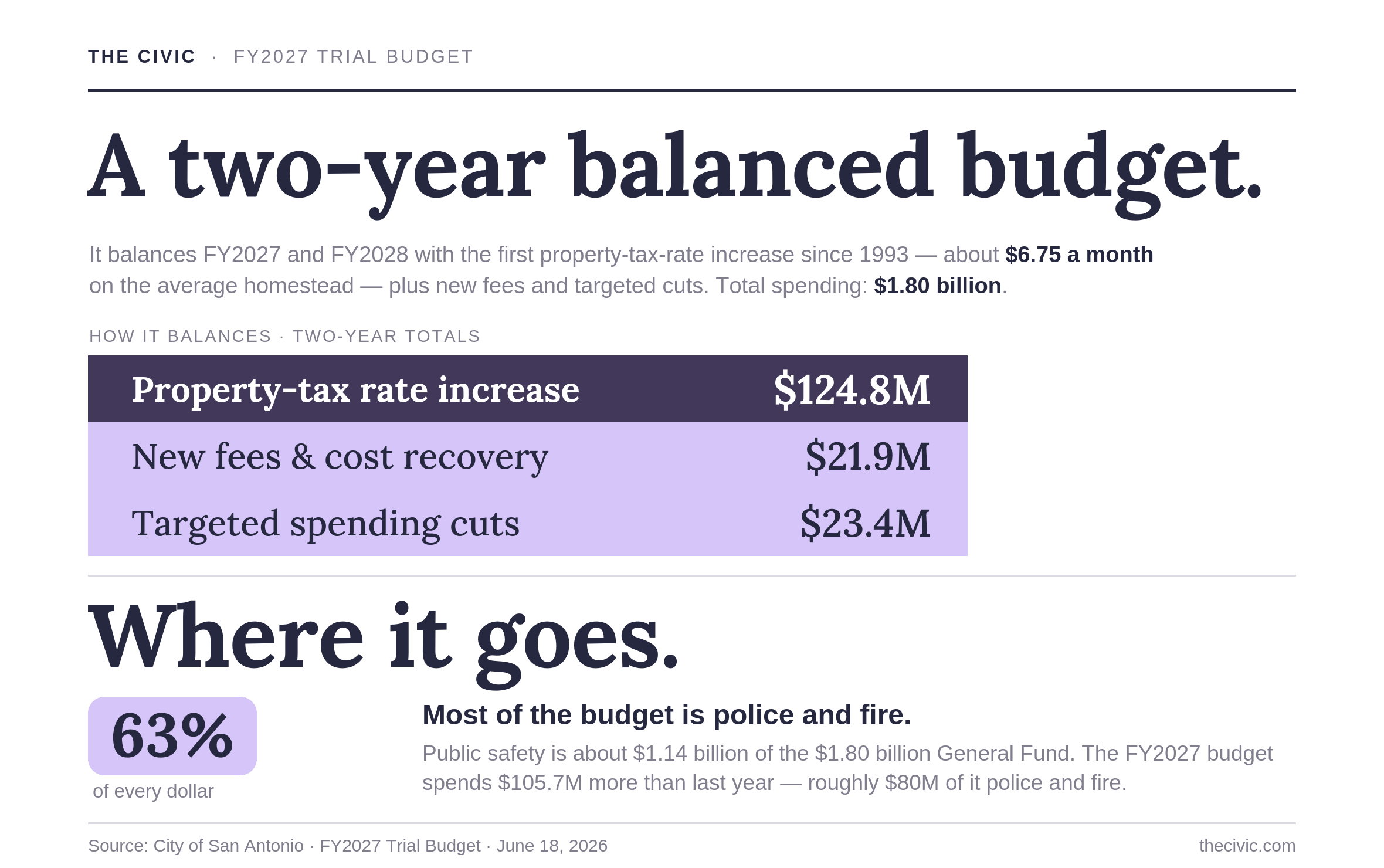
City Council got its first look at the FY2027 trial budget on Thursday. Inside it: the first proposed property-tax rate increase since 1993. The catch—it balances the budget for the next two years, but raises rates to do so and even maxing the rate doesn't close the structural gap the city's been warned about for years. It’s worth noting that the trial budget treated the overwhelming majority of city spending as untouchable, which would make significant cuts very difficult if council continues to signal an unwillingness to increase property taxes. We're watching because this is the first hint at what the city could cut, because council may push harder to avoid a rate hike, and because the numbers could be revised as the budget review process continues into August.
Read The Civic's full coverage of the trial budget council session by Jarrett Whitener here.City staff gave council a Project Marvel update Wednesday. The city aims to lock down roughly $91 million in downtown land purchases by the end of the year, including the site where the new arena will eventually be built. Staff still have to finalize financing, leases, and construction timelines, even as Mayor Jones pushes for Michael Dell to cover the city’s share of the arena bill (an awkward request considering previous interactions with the Spurs part-owner). We're watching because Project Marvel is a complicated, multi-step plan and remains a political controversy. Each step must be executed properly to avoid disrupting the whole project, or its scope. See the cooling plant debacle that nixed the Project Marvel hotel plan. If too much of the overall plan is disrupted, the outcome could look nothing like the entertainment district promised, and taxpayers are still on the hook for the arena.
Saying it needs more time, city council narrowly voted to reconsider a SAWS rate hike in October. In a 6-5 vote Thursday, members delayed the water utility's proposed rate hike until October, after a long session spent hammering CEO Robert Puente over a lack of trust, construction delays, and the 16 billion gallons SAWS lost last year. The meeting was contentious: as Jalen McKee-Rodriguez asked Puente, why does SAWS only have a plan to fix its problems now that it needs the money? But the delay doesn't make things any cheaper—Puente warned that pushing projects into 2027 will only raise costs, and the eventual rate increase with them. We're watching because the real question is whether the next few months translate into any sort of reform at SAWS, or just produce a bigger bill in October with nothing changed.
The Reframe
Alamo Colleges District plans to increase property tax rate to balance budget (SA Report) → Nearly every municipal organization defaults to asking for more money rather than cutting spending. Facing a deficit, Alamo Colleges' first move isn't to cut or reform, but to raise the tax rate. This as the city's trial budget leads with the first property-tax-rate increase in 33 years while holding cuts to a minimum, CPS passed a budget which initially assumed a rate increase, and SAWS just asked for a substantial water-rate hike. For a public institution, billing the taxpayer more is the path of least resistance, and there's always a reason the spending can't be cut. The job of forcing the question falls to our elected officials, and this week, to its credit, City Council appeared entirely unwilling to support the city's tax increase without seeing departmental cuts and voted 6-5 to delay SAWS's rate increase. The institutions will always reach for more revenue; someone has to make them consider the alternative.
VA Secretary swings through San Antonio, talks about fast-tracking new hospital (SA Report) → Forget politics, any senior official should be welcome in San Antonio—and the VA Secretary doubly so. VA Secretary Doug Collins came to tour the existing Audie Murphy Veterans Hospital and push a brand new VA hospital—$30 million for land acquisition is already in this year's federal budget—toward the finish line. San Antonio is a natural fit for this project, but natural fits can still lose out when cities give officials a reason to look elsewhere. San Antonio should be courting substantive visits from anyone and everyone in Washington, and refusing to let national politics decide who it does business with. We’re in a political environment where cities sort themselves by party and officials show up only for friendly crowds, so it’s important to be the kind of city that every administration wants to invest in.
San Antonio ranks among nation’s top three markets for first-time buyers as inventory climbs (Business Journal) → A real victory for San Antonio, but affordability is not prosperity. Zillow ranks the San Antonio metro third in the country for first-time buyers—most big cities are simply much more expensive than we are. But, again, affordability isn't prosperity. San Antonio is still one of the most impoverished big metros in the country, and cheap rent doesn't fix that, it just makes it more comfortable. The cities that actually provide opportunity aren't the absolute cheapest ones; they're the ones building economies that throw off capital, corporate headquarters, and high-wage jobs at a meaningful scale. Look at Houston—Houston is the one Texas metro poorer than we are, and it’s nearly as cheap as San Antonio (its cost of living running a mere 3% higher.) With all their poverty, they have 27 Fortune 500 headquarters to our two, and 36 Fortune 1000 headquarters to our four. Which city do you think will generate more opportunity (and tax revenue) for its residents?
The Pick
Our weekly recommendation for what’s going on in San Antonio
This week we have two for you: both are on Wednesday, June 24th, and both are aimed at making you a more informed resident.
Runways to Rockets

CNTR/CTY and Tech Bloc close their Emerging Industries Series with a panel on aerospace: the defense, air-mobility, and space sectors already supporting thousands of local jobs. Held at Port San Antonio, one of the economic powerhouses of the city.
Free, but register. 4:30–6:30 p.m., Boeing Center at Tech Port, 3331 General Hudnell Drive. Register here.
Mayor’s Monthly Town Hall
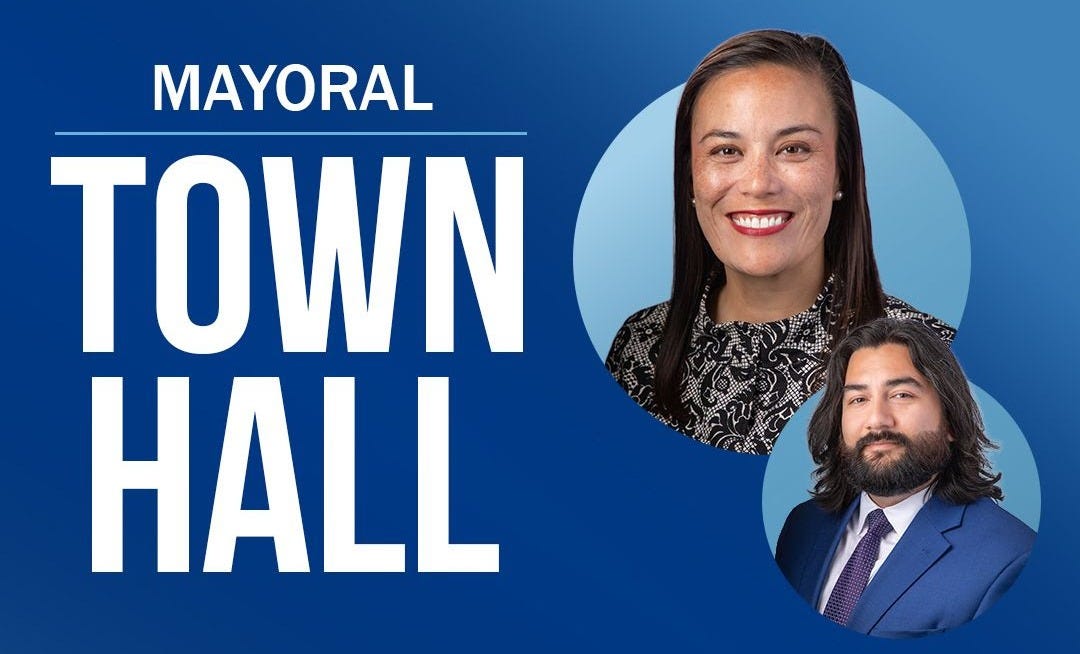
Nearly everything in this brief—the property tax increase, the cuts council wants to see, the delayed SAWS hike—will be argued over the next three months, and this is where you can ask your questions to the person at the center of it. Mayor Jones takes questions at her monthly town hall, alongside District 4’s Councilman Edward Mungia.
RSVP encouraged, not required. 6–7 p.m., Robinette Community & Senior Center, 1423 S. Ellison Dr., Bldg. 2. RSVP here.
Thanks for another week. Follow us on your platform of choice: X/Twitter, LinkedIn, Instagram, and Facebook. Story tips and reader notes go to our reporter Jarrett Whitener at jarrett@thecivic.com, and my inbox is always open.
A particular thanks to our Charter members, whose continued generosity allows us to operate.
As noted above, we published our first news story this week. It went out by email notification this time, but in the future we will only highlight them in the weekly newsletter to minimize the number of emails you receive from us each week.
Enjoy your weekend and see you Tuesday.
- Philip Reichert
Editor, The Civic
Doesn't SA already have the largest indebtedness in the state? Nothing is said about city revenues from its various development agreements and municipal corporations. The real discussion needs to address our structural limitations as to what civic success looks like. After all, in Governance and Foresight by the Prosperity Index metrics, SA ranks "below average", #151 out of 250 U.S. cities. We are deeper into the hole than talking about balancing the current budget.