



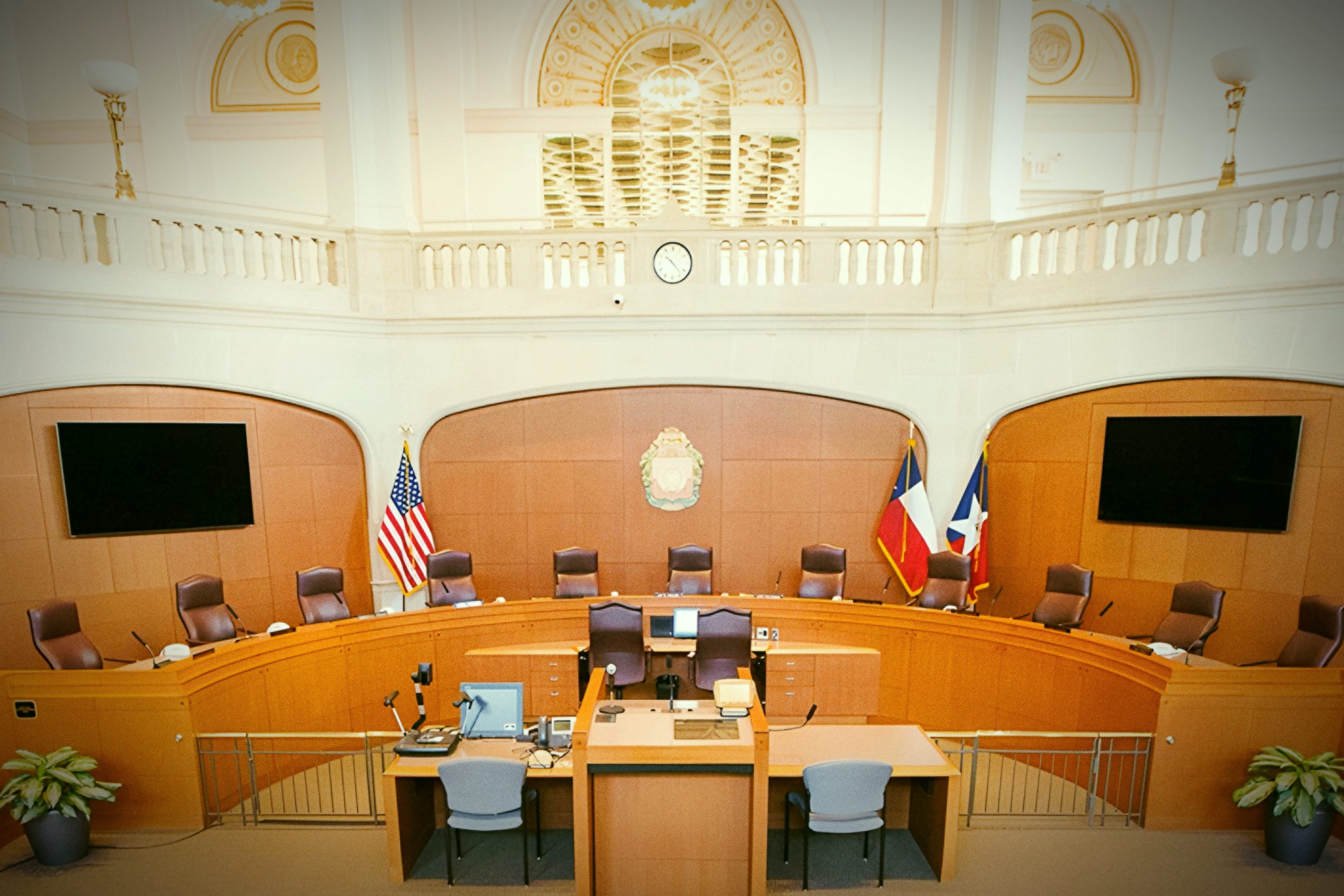
San Antonio has not raised its property tax rate since 1993, a streak City Manager Erik Walsh says is “not lost upon me.” This Thursday, City Council will be briefed on a “trial budget” for fiscal year 2027 that is likely built around ending that streak. There's a better answer: take a rate increase off the table, zero-base the entire budget, and stop deferring hard decisions.
The city’s budget forecast shows a $130.7 million hole in 2028, deepening to $264 million by 2031. City Hall presents this as the math of things happening to San Antonio: falling revenues, unavoidable costs, and ultimately no choice. But none of this is a surprise. The city's earlier forecast projected a 2027 shortfall all the way back in April 2024, and by May 2025 council was briefed that the same 2027 gap had nearly tripled to $148 million.
Spending growth is a longtime pattern for San Antonio. The general fund has grown from around $1.1 billion in 2016 to $1.7 billion today, more than half again in ten years, ahead of inflation and population growth. So is the city run that much better than a decade ago? Are the streets that much smoother, the response times that much faster? Even the most optimistic resident would disagree. The overall budget tells the same story: from around $2.5 billion in 2016 to $4.06 billion today, up over 60 percent. Spending simply expands as a rule.
Faced with deficits of this scale, a rate increase fails to solve the immediate problem. Even at the maximum rate, the city’s own forecast still calls for roughly $70 million in reductions over two years, and the 2031 gap only narrows to $196 million.
No, the core problem is that the city always defers the hard decisions by refusing to give serious scrutiny to the budget. Two members of city council described the political dilemma: Councilwoman Phyllis Viagran (D3) has pressed the no-tax-increase side to be specific, to say “where we are going to cut—what you are willing to sacrifice.” And Councilman Jalen McKee-Rodriguez (D2) put the dilemma plainly: people don’t want higher taxes, and they don’t want their services cut—“and so where do we go from here?”
Where, it turns out, a colleague had already answered. Councilwoman Marina Alderete Gavito (D7) said that “all of us up here were elected to do hard things,” and that the council simply needed to make the tough decisions. The other decisions are easy: a new program, more funding, new assistance to announce for your district. Everyone wants that job. Being the elected official willing to say “that’s enough” is harder, and far less popular, and it is every bit as much what the office is for.
The cuts, which council keeps treating as impossible, are anything but. The city’s own May presentation concedes a category of “non-core, non-mandated services,” and staff managed to produce nearly $111 million in reductions over three years for last year’s budget. The savings appear when the will to save appears.
So when council treats a spending reduction as the unanswerable part of the problem, don’t be convinced. Someone who has spent years inside city government, with the whole budget in front of them and a professional staff to pore over it can surely name a reduction. Councilman Marc Whyte, fond of saying the city has a spending problem and not a revenue problem, was pressed in May to be specific. He pointed to $1.5 million at La Villita and $500,000 for analytical tools, then added, “I’m not saying to cut all this.” Why not? He bet there were millions more to find, and he is certainly right.
The mayor, for her part, is doing the other thing a city does to dodge the responsibility of fiscal restraint, floating unpaid fines, a bigger transfer from SAWS, the $2 million the Spurs still owe from the failed MLS bid, and letters asking Spurs chairman Peter Holt and billionaire Michael Dell for help, including a request that Dell cover the city’s $489 million arena bill. Some of these ideas may be helpful in the long run, assuming any at all work out, but even in total don’t solve the problem. It’s long past time to come to terms with reality.
This is what the job is. Not only the ribbon-cuttings, the program announcements, and the new funding that everyone wants to stand up and announce, but the hard decisions. We are in this position because council refused to make those decisions—for more than two years, with the forecasts in hand—and until someone is willing, the spending won’t stop. So council has not earned a rate increase, and does not deserve one before it has shown it can hold the line on a single dollar of what it already takes in. Restraint comes first. The new money, if it ever comes, comes after.
Thirty-three years with no rate increase is the one fiscal promise this city has kept, it should not be traded away when the city still won’t spend within what it takes in. If the trial budget is unveiled on Thursday with a tax increase inside, the right answer is no, we haven’t earned it.
Solid piece.
One of the hardest leadership lessons, whether in the public or private sector, is recognizing that not every initiative deserves indefinite support simply because time, money, or political capital has already been invested in it.
Starting something is often the easy part. Deciding what to stop, change, or redirect is where leadership gets tested. The really hard part is admitting when an initiative, policy, project, or investment isn't delivering what was intended and having the discipline to reallocate resources elsewhere.
Those are rarely popular conversations, quite frankly in public or private, but it's how organizations continue to improve rather than simply continue.
Greater understanding
Thank you