



What We’re Watching This Week
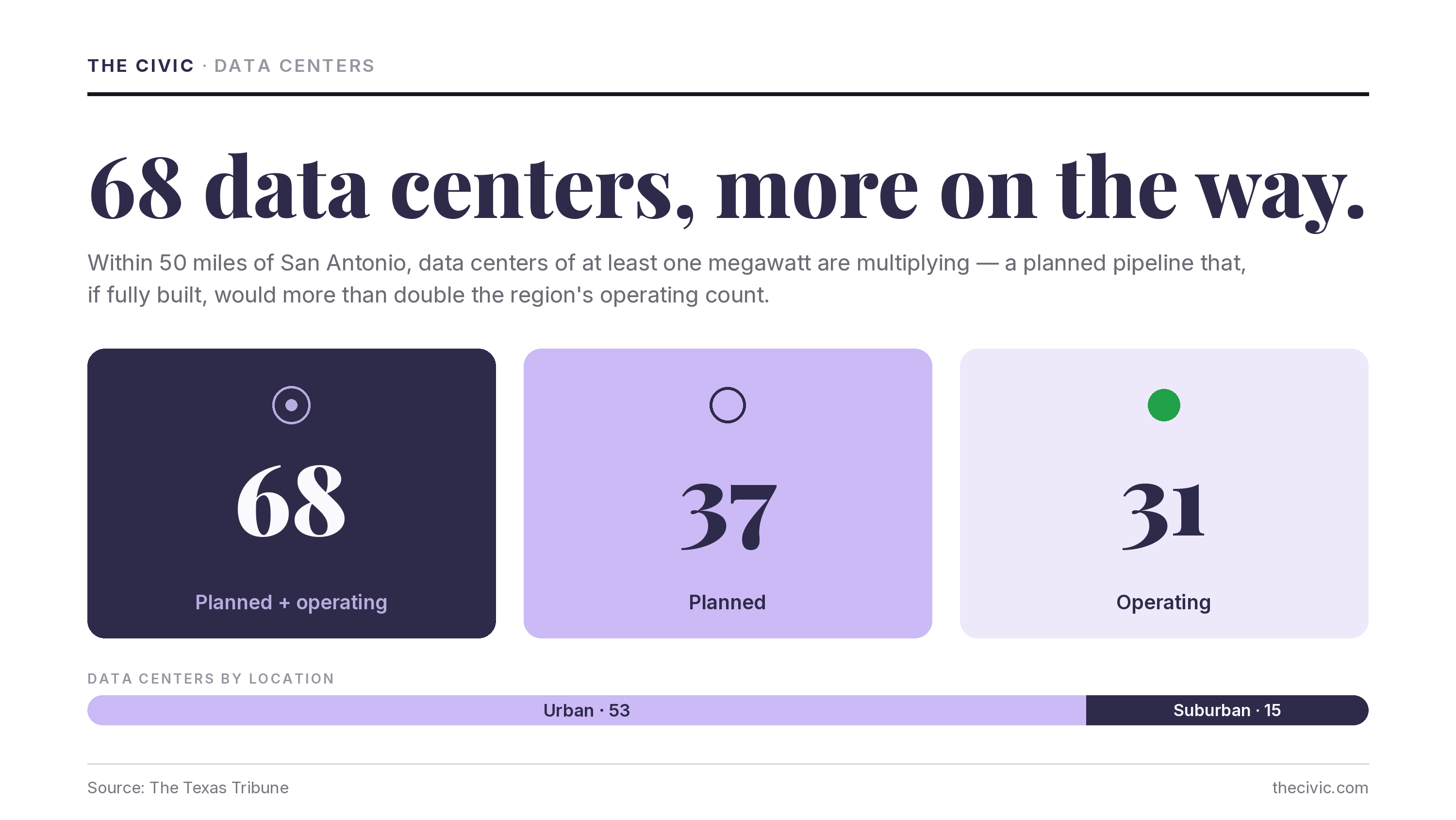
Data centers: no moratorium, but a real zoning debate. At a meeting on Tuesday, city council declined to commit to a moratorium on new data centers, opting instead to keep refining amendments to the Unified Development Code, a slower but more permanent change. Only a few members have publicly backed a moratorium so that will not happen. As such, proposed changes are comparatively modest and subject to change: a proposed 500-foot buffer between data centers and homes & schools is being reworked after industry pushback, with staff looking for other ways to limit noise and light pollution. The changes would also limit data centers to commercial and industrial zones and prevent their development over the Edwards Aquifer Recharge Zone. Expect it to change again before it reaches a vote—the siting and buffer rules could still get watered down along the way. We're watching because, though San Antonio should never reach for overregulation, the city didn’t immediately take the extreme path like other municipalities have. It remains to be seen if this will continue.
Crime is down from its 2023 peak, but “down” is still well above the national average. San Antonio’s crime rate fell to 8,986 incidents per 100,000 residents in 2025, down 13% from the 2023 peak of 10,342, per an Express-News analysis of SAPD data. Violent crime declined, including murder and aggravated assault, and a drop in car thefts drove much of the improvement. There has been a noticeable decline in crime over the last few years—SAPD credits its 2023 Violent Crime Reduction Plan. But on the FBI’s narrower standardized measure, San Antonio still runs about 2.5 times the national crime rate (5,218 versus 2,119 per 100,000 in the most recent 2024 data), with violent crime roughly 65% higher and property crime more than two and a half times higher. And not everything is falling, with various nonviolent categories up since 2021. We're watching because dropping off from an unusually high base is progress but not enough, improvement beyond historical norms will be the real sign of change.
San Antonio lands a major deal with IEM, the second major economic win in recent months. Industrial Electric Manufacturing, a California power-equipment maker, will build a $200M, million-square-foot plant at Brooks that the company and greater:SATX call the largest job-generating project San Antonio has landed in over two decades. It’s the second marquee manufacturing win in two months, after Toyota’s $3.6B assembly-line expansion in July. Two have now landed, a real mark in greater’s favor as it just won a $1.4M county contract. We're watching because these two deals together represent a meaningful change in the job creation & company attraction trendline, and keeping it in this direction would be a major shift.
The Civic is independent, nonprofit, and nonpartisan. We are supported entirely by our readers and our Charter members. Consider supporting our work.
The Reframe
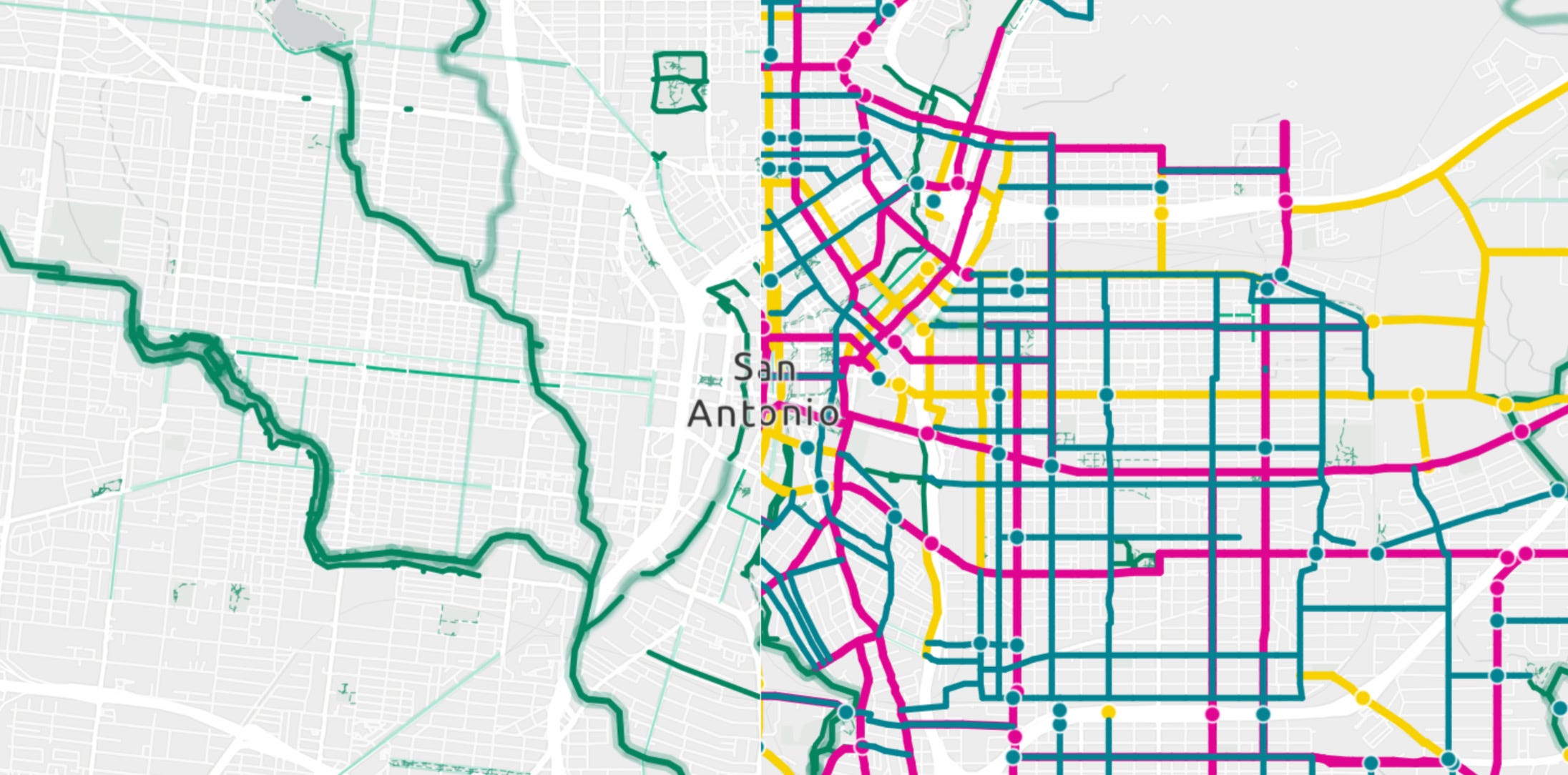
City pushing ahead on ambitious bike plan, despite funding challenges (Express-News) → No one bats an eye at a bike plan that will cost anywhere from 3 to 8 billion dollars? Before anything was cut from the upcoming budget, the city walled off certain categories. The budget was, in its own words, "designed to protect essential services" and to fund the priorities residents ranked in this spring's survey. But this just means that the $158 million has to come out of whatever's left, which in this case turned out to represent a medley of small changes plus a tax hike. Facing this budget problem, it seems unusual that we don’t at all scrutinize a $3-to-$8 billion bike plan, or (perhaps most importantly) the decisions that led us there. Note how, just last year, it was defended as only “$21 million to $56 million per year for 25 years” by the Express News Editorial Board as they emphasize the previous, robust $1.2 billion bond. “That doesn’t seem extraordinary” they say. How times change. It’s hard not to feel like city hall is debating minutiae while the bulk of the budget is untouched and already set, meanwhile the bike lanes ride on unquestioned. There’s no way we’re spending $21 million per year on bike lanes, but how much are we spending? What else have we failed to scrutinized?
SpaceX unveils $100B Louisiana Starbase that will dwarf South Texas site (Express-News) → Another major Musk-orbit project, San Antonio still without one. The most consequential builder in Texas just moved a $100 billion project across the state line into Louisiana, and the conversation still didn't include San Antonio. True, we were (probably) never getting a launch pad on the riverwalk, but hundreds of billions of dollars in capital has now picked basically every town in Texas & even left the state before we managed to earn a project of our own. At this point, it’s more embarrassing than anything else. We lost Tesla's battery plant to Reno a decade ago. Austin won the Gigafactory, and then the headquarters. Bastrop, Grimes, McGregor, Brookshire, Corpus Christi… Every direction except here, and now out of Texas entirely. Other cities keep picking up the phone, why not us? Our leadership should be working tirelessly to make it known that San Antonio is open for business, and we haven’t landed a single dollar from this massive economic expansion.
SA airport takes a hit as airlines ground flights (Business Journal) → Mid-construction on a multibillion dollar airport expansion, we’re leaking passengers. San Antonio International lost 4.9% of its traffic in the first half of 2026, more than 256,000 passengers. Just up I-35, Austin's airport grew 4.6% in the same window, to more than double our traffic. Though we face essentially the same macroeconomic circumstances, the traffic for each airport is moving in opposite directions. It’s easy to blame the airport, but San Antonio has a demand problem, plain and simple, and that doesn’t immediately resolve with a new, shinier terminal. The mayor herself calls carrier recruitment "critical," and that may benefit from the ongoing expansion, but the risk is a bigger terminal while the traffic it's built for keeps choosing Austin.
Behind the scenes of the biggest one-year school turnaround in San Antonio (Express-News) → The city’s biggest school turnaround didn’t come from more funding, it came from good management. A lesson, there? Pershing Elementary climbed from an F to a B in a single year, the largest jump in the San Antonio area. It’s a campus where 99% of students are low-income and nearly half are learning English. So, did they get millions more dollars, or the latest technology? Actually, the methods cost almost nothing: teachers reassigned to teach the subjects they're strongest at, a principal who checks in with kids, reading nooks built into hallway corners, multiplication drills folded into PE, and glow-stick dance parties for the students who passed a practice test—all things that "don't cost a lot but mean a lot to a fourth grader." "There's no secret," principal Shelene Livas said. "It's just hard work." It's worth remembering this at the next budget hearing, because it goes against the assumption that better results are tied to more money. And if a campus where nearly everyone is low-income can go from worst to first in a year on competence and effort, the schools that still fail can't blame poverty or budgets alone.
The Pick
Our weekly recommendation for what’s going on in San Antonio
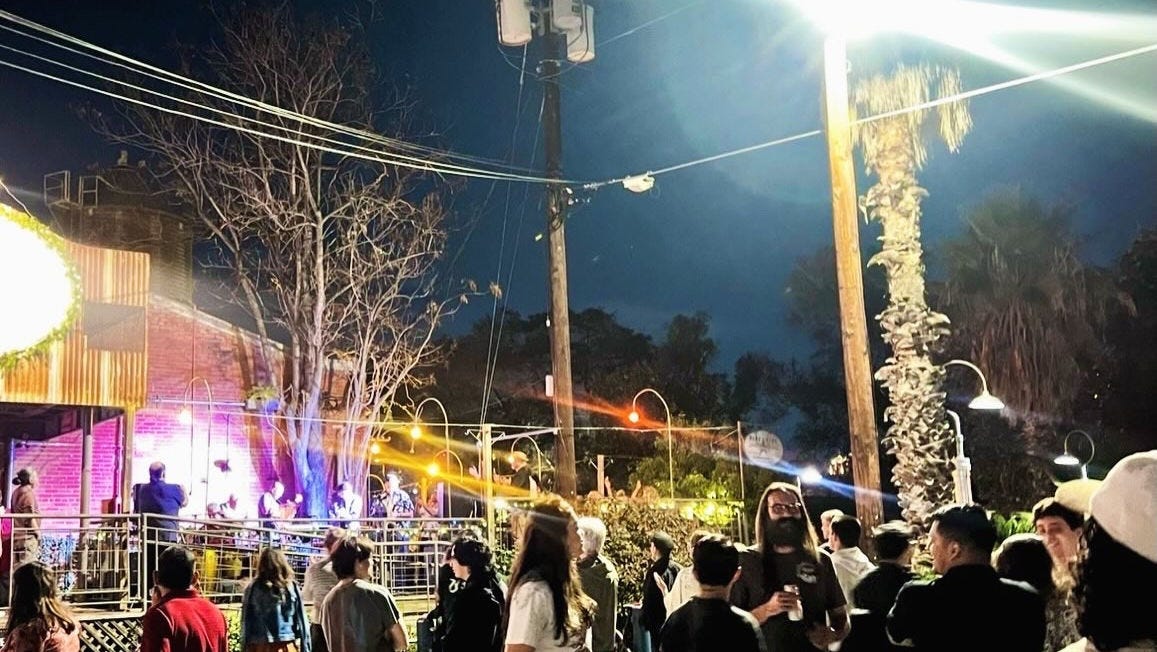
First Friday at Blue Star, and the opening of Fotoséptiembre
San Antonio's longest-running art walk continues on Sept. 4 this month, and it collides with Fotoséptiembre. That's the citywide photography festival Michael Mehl started in 1995, running Sept. 1–30 across San Antonio and the Hill Country, now in its 32nd year. Fri., Sept. 4, from ~6 p.m. At the Blue Star Arts Complex, 1414 S. Alamo St.
Thanks for another week. Follow us on your platform of choice: X/Twitter, LinkedIn, Instagram, and Facebook. Story tips and reader notes go to our reporter Jarrett Whitener at jarrett@thecivic.com, and my inbox is always open.
A particular thanks to our Charter members, whose continued generosity allows us to operate.
Enjoy your weekend and see you Tuesday.
- Philip Reichert
Editor, The Civic
The other day. I actually saw a man pedaling a bike in the bike lane on North New Braunfels. A first and definitely worth 20mm a year.
Why would a cutting-edge, entrepreneurial, rocket and space corporation choose to invest in a city whose brand is Military City, USA? Whose cultural identity is as a colonial city with a "rich culture"? Whose Foresight and Governance metric in nat'l rankings are "below average", rating #151 out of 250 U.S. cities?