



What We’re Watching This Week
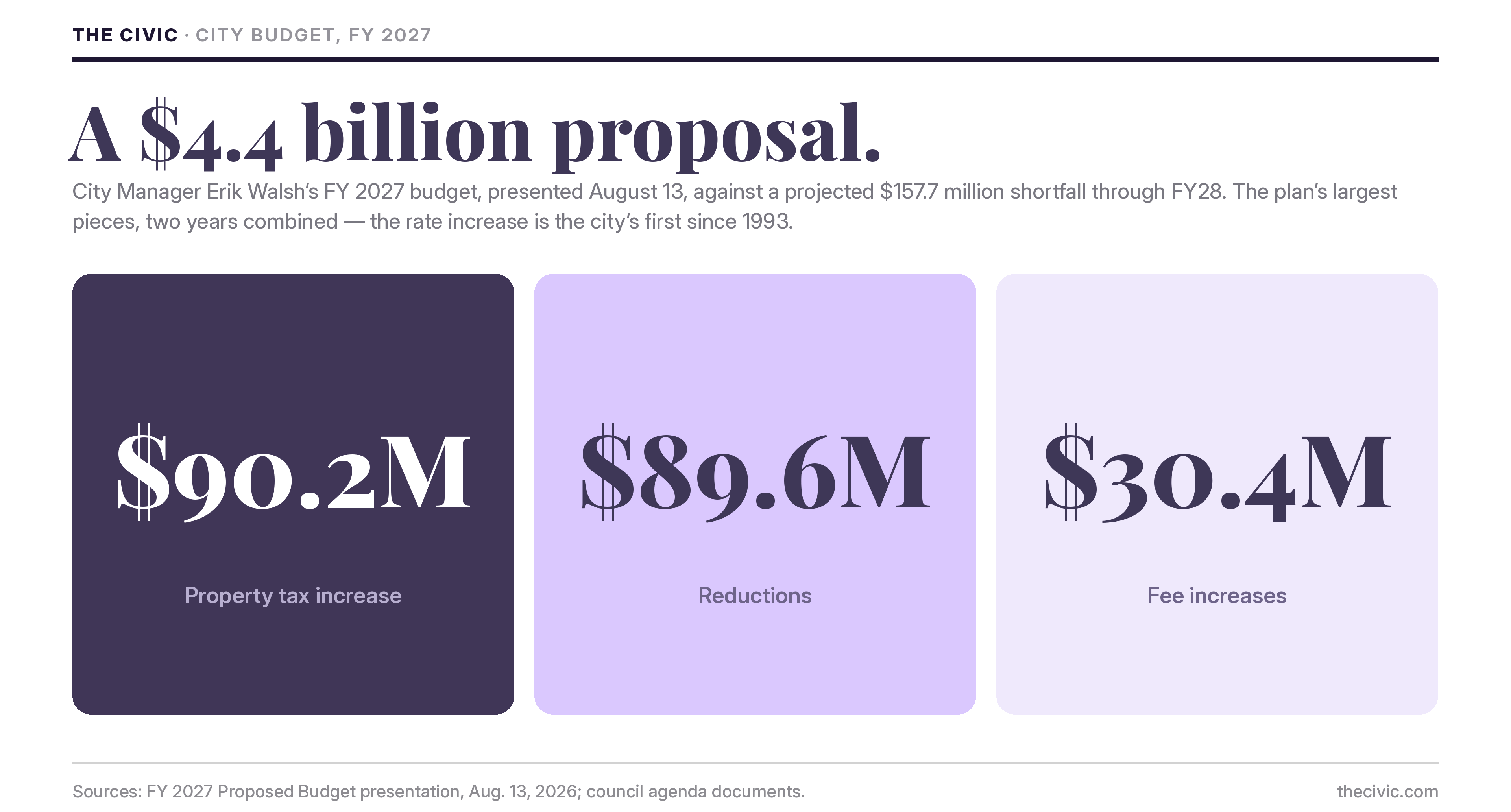
What we're watching this week is City Council, plain and simple. Yesterday was our first look at what the upcoming city budget will really look like. The details: a $4.4 billion budget with a $1.76 billion general fund, and a tax rate increase is looking much more likely. The proposed cuts run $90 million across two years with more than $41 million of it next year. By the end of the day the council had refused to prevent a rate increase, with only Alderete Gavito, Spears, and Whyte voting to keep the tax rate at its current level. Technically this vote only set the ceiling, and the tax rate could end up at any figure lower than the one council voted on, including the current rate. But the reality is a “no” vote was the only realistic way to enforce a budget drafted around the current tax rate, and now we need a council majority to agree on $30 million in cuts inside six weeks while the budget is already built on the increased revenue.
Read The Civic’s breakdown of the budget and this council meeting here.
So after spending most of the summer peacocking about fiscal responsibility, city council will likely move forward with a tax increase—but it’s the cuts that deserve our attention. The budget advertises $90 million in reductions across FY27-28. But reading the breakdown, tens of millions of dollars of that is transferring those expenses elsewhere in the budget, a reallocation rather than a true reduction. Meanwhile, the budget that cuts 101 city positions actually grows the total city headcount, so the city still manages to get bigger despite so-called austerity. Councilwoman Kaur called the proposal a happy medium, though the reality is the budget balances some $90 million in reductions and transfers (nearly a third is just reallocated to other parts of the budget, not even cut) against $120 million in new taxes and fees, hitting residents harder than city funds. Erik Walsh himself said “I don’t think there’s any major reductions to services that people will feel,” which begs the question: if we wouldn’t feel the loss of these programs, why were we funding them in the first place? So Thursday’s budget is the comfortable, and wrong, choice: obligatory cuts on services that should have never existed paired with a rate increase small enough to have a veneer of reasonability, as we continue to defer the difficult choices. But we don’t have to wait very long. Even with the proposed cuts, the next hard choice is actually next year. The math for FY28 only makes sense if there’s a property tax increase again, so we’ve already basically accepted this whole process again in twelve months. We wrote in June that a core part of governing is making hard choices, but what we’re witnessing with the budget is nothing of the sort, just managed decline. The Mayor spent the summer presenting as a champion of fiscal responsibility yet wouldn’t vote to avoid a tax increase. Only three councilmembers made the hard decision and voted to prevent an increase outright—Whyte called the budget bloated by decades of poor spending habits and the increase a Band-Aid, saying it was "frankly unconscionable." Meanwhile, Councilwoman Viagran asked residents to see this as an opportunity to invest in city services, not a tax increase, which feels like little more than cheap marketing. We’re watching to see whether the upcoming hearings function as real deliberation or whether the budget is essentially set.
Also at City Council: the Mayor’s push to disrupt Project Marvel will get a vote at city hall. Mayor Jones’ longtime campaign against the arena development plan has culminated in a special session next Monday, where hours before the state deadline for the November ballot, council will debate and vote on whether to put the city spending for Project Marvel to city voters. At least six members of council have already publicly indicated they do not support the measure, so without a flip, it goes nowhere. The Spurs need no public defenders, and the facts have been litigated by nearly everyone in town over the last year, but it must be said: the city funding got the vote that the system requires for it, a 7-4 vote by the elected council last August. If the financing required ballot language, it would get it, and realistically would have won since a majority of City voters approved the county ballot in November. And the money cannot do what the Mayor asks, as the Mayor herself conceded this week, arena dollars are not part of the general fund. In sum, the same week she voted to keep a tax increase alive, the Mayor is demanding an election about money that cannot pay for anything. This is just a kind of episodic activism, from the same playbook that lost us Chick-fil-A at the airport and passed on bidding for the RNC. It is also expensive, because businesses pay close attention to this sort of unpredictability. We're watching Monday's vote to see who joins the Mayor’s performance, and why.
The Civic is independent, nonprofit, and nonpartisan. We are supported entirely by our readers and our Charter members. Consider supporting our work.
The Reframe

A blockbuster $12.5B deal as Josh Kushner and Bob Iger agree to buy the Lakers (Express News) → As we tear ourselves apart over an arena, the market prices major franchises at eleven figure valuations. Not to hammer Project Marvel too much, but look at what these franchises are worth. The Spurs might not be the Los Angeles Lakers (better at basketball lately, though) but they're a crown-jewel franchise in a small market, which is more than you can say about the overwhelming majority of professional sports teams. We're turning a new arena deal, the status quo for all small market teams, into a political crusade. The NBA isn’t a perfectly capitalist system, it’s a cartel that enforces scarcity. With every negotiating advantage in the world, the Spurs are paying over half a billion dollars to be here. They clearly chose San Antonio. That preference has a limit, though, particularly when the opportunity cost is in the billions of dollars. Blow up the deal for political theater and the next Spurs arena negotiation will be in Austin, or Las Vegas (the name works for both!) and their valuation will be better off for it.
Abbott’s move against CPS is about subverting local control, not affordability (Express-News) → It’s hard to judge the proposal on its merits, but Abbott is definitely right about one thing. When we asked for details on the Governor’s energy proposal, which intends to end the energy monopolies enjoyed by CPS and Austin Energy, we were provided what is effectively a campaign flier short on details. The affordability argument won’t convince, given that CPS, by all accounts, does a great job providing affordable energy to San Antonians. But something in that last line has some merit: preventing cities from using utilities as slush funds. Slush fund would be the wrong word for CPS energy revenue, it’s actually a “payment in lieu of taxes.” So roughly a quarter to a third of the general fund is essentially a tax that isn’t subject to any of the processes required for taxes. Look at the budget fight we're covering right now: it has featured months of council sessions and staff deliberation, and will be followed by numerous work sessions, all to raise the property tax rate for the first time in 33 years and collect about $29 million. CPS sends nearly twenty times that every year with none of it. Worth torching San Antonio’s finances over? Probably not—but now would be a great time to have city leadership with influence in Austin.
City leaders hope a Democratic wave election will protect Pre-K 4 SA from future cuts (SA Report) → A twenty-year guarantee would retire the proof point justifying the program. Every defender of Pre-K 4 SA in this article cites recurring voter approval as evidence of its success, but “it’s a clear winner” and “we need to ensure it for 20 years” shouldn’t both be true. The first Pre-K 4 SA cohort graduates high school next year, meaning the first real full-length data won’t exist until 2027. The current schedule would put reauthorization after that evidence exists, when it can be weighed publicly and put to voters. This move puts the vote before the data arrives and cancels at least two future opportunities for voters to decide if they’re getting their money’s worth. If the data comes back strong, they've spent political capital to dodge a test they'd have aced… But if it comes back weak, we'll know why the vote was moved. San Antonio is in a fiscal crunch right now because of an inability to manage its spending, now we want to lock ourselves into a generational financial commitment when the system was working just fine before.
Councilwoman pledges to lobby against SAWS rate hike until utility releases missing financial audit (SA Current) → Among the best decisions made by a public official all budget season. “Ratepayers should not be expected to approve a higher bill based on general assurances, descriptions of capital needs or an unfinished efficiency study.” That’s Councilwoman Misty Spears to the SAWS board chair, and that perspective should be the baseline for every public dollar in this city. The best version of San Antonio is the one where our leadership pays close attention to where our dollars go and holds our institutions accountable. The difficult part is building it as a culture rather than a move deployed selectively.
The Pick
Our weekly recommendation for what’s going on in San Antonio
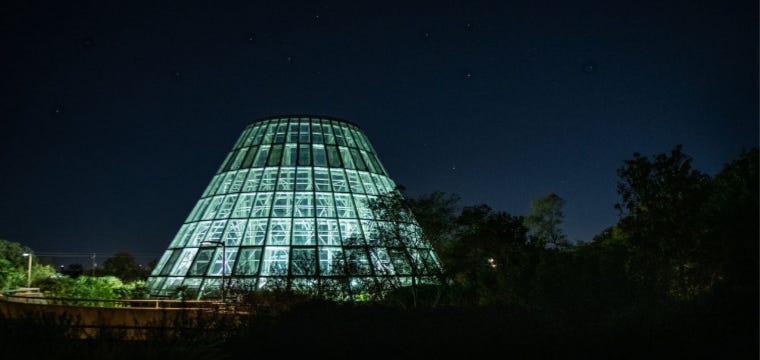
Family Night Hike at the San Antonio Botanical Garden
This evening, Friday, August 14th, at the San Antonio Botanical Garden, 555 Funston Place. A guided after-dark hike with the Garden's educators discussing nocturnal animals and the garden itself. Tickets run $13 for kids, $17 for adults.
Thanks for another week. Follow us on your platform of choice: X/Twitter, LinkedIn, Instagram, and Facebook. Story tips and reader notes go to our reporter Jarrett Whitener at jarrett@thecivic.com, and my inbox is always open.
A particular thanks to our Charter members, whose continued generosity allows us to operate.
Enjoy your weekend and see you Tuesday.
- Philip Reichert
Editor, The Civic