



Military procurement and logistics have been a longstanding problem for decades. Since the 90’s, the number of aerospace and defense prime contractors has shrunk 90%. The Government Accountability Office, or GAO, wrote that the average time frame to deliver a major weapons program actually increased this year to exceed 12 years. When Russia invaded Ukraine in 2022, America was producing around 14,000 artillery shells per month. The Army set a goal to produce 100,000 per month by October of 2025, and as of March, it had managed only 36,000.
This is despite a bipartisan push for defense procurement reform in recent years, under administrations of both parties. During President Biden’s term, the Pentagon created a new Office of Strategic Capital to facilitate more private investment in defense tech. Last year, Congress overhauled the defense aquisition system with bipartisan reform legislation. And Pete Hegseth has led his own reforms, promising to move the Pentagon away from the “current prime contractor-dominated system” toward a “dynamic vendor space.”
The private sector is responding to this sea change. Defense tech startups raised a record $49 billion last year, up from $27 billion in 2024. Anduril opened a new factory near Columbus, Ohio, that will employ more than 4,000 people. Saronic, the autonomous shipbuilder, is building a $3.2 billion shipyard here in Texas. Aerospace and defense are even putting down roots in Cedar Park.
This is all an enormous opportunity for San Antonio.
Our defense industry assets are significant and hard to replicate. No fundraising round can buy an 11,500-foot runway, a legacy of military aviation, or the largest joint base in the Department of Defense.
Wherever you look in San Antonio, there are hints at the deep advantages we have. Kelly Field’s runway is the longest in the region, and Port San Antonio has 400 acres with direct access to it. The airfield itself was home to the Air Force’s San Antonio Air Logistics Center until 2001, and some of that talent remains in the area: as we wrote in June, every C-17 in the American fleet still comes here for its deepest maintenance. More than 40 percent of Boeing’s San Antonio workforce are veterans.
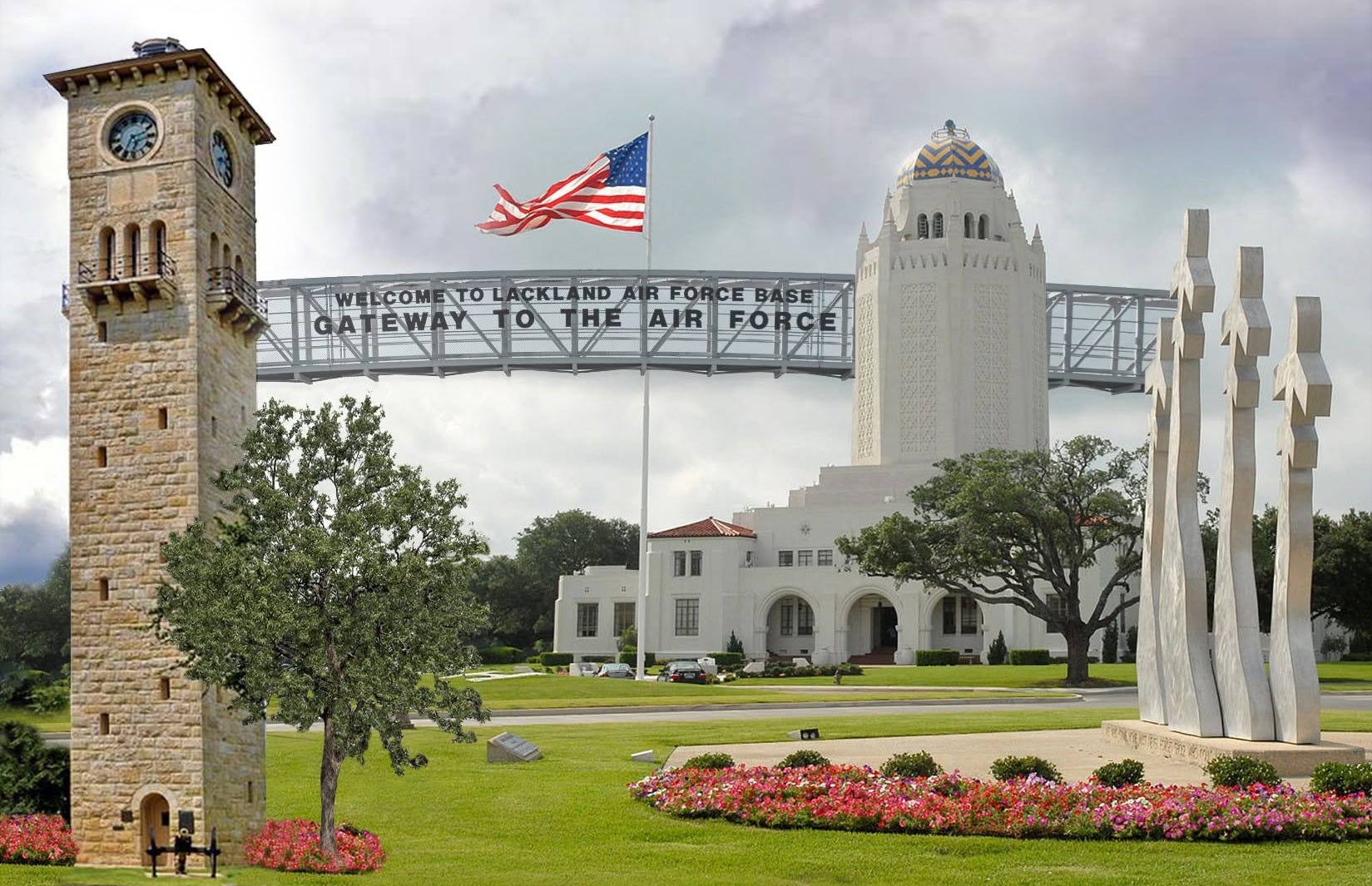
Meanwhile, Southwest Research Institute holds a $250 million Air Force contract to study how aircraft wear down over time. Camp Bullis has 28,000 acres and 21 firing ranges. The 16th Air Force, which runs the Air Force’s intelligence, cyber, and electronic warfare missions, is headquartered here at Lackland. On the South Side, Toyota is durable proof of San Antonio’s manufacturing pedigree.
We even have a homegrown defense tech company. Darkhive, which builds autonomous systems for the military, won a $49.7 million Pentagon contract, the largest in its program’s history, and in May closed a $30 million round, led by RTX Ventures, to speed up production.
The only thing missing is more companies. With a few exceptions, most of the infrastructure in place is inherited rather than recently earned. Most of our military economy was built by D.C. deciding to put things here and the city merely had to host them well. In total, military installations still support more than 86,000 jobs.
But there are reminders that this space is still a marketplace. Army South closed in May and Army North closed in July, both folded into a command at Fort Bragg, taking several hundred jobs with them. In August, the city’s new director of military and veteran affairs, retired Maj. Gen. Scott Jackson, said the Military City title is “earned every single day, and just like a boxing title, you can lose it like that.”
The military economy is changing, quickly. Most of what we have is durable, but to truly take advantage of what is happening in the defense tech space we need to focus on building what the defense base buys, not just hosting the bases well.
We can clearly compete when we make the decision to do it: the city and Bexar County each put up $10 million to renovate a building at Fort Sam Houston for the Defense Health Agency, a push that could bring as many as 960 jobs to San Antonio. The state also put its new Texas Cyber Command here. But those are government agencies, placed here by officials in D.C. and Austin. Winning companies requires a different playbook.
So pick up the phone. City and county leaders should make defense tech an explicit target. Everyone in our leadership should be concerned with landing the next Saronic, the next Anduril—which would do far more for San Antonians than any pet project. And we should lead with what money can’t buy, not a subsidy. Port San Antonio says it has grown with almost no public incentives, which is exactly the point.
Every company in this boom can raise money. None of them can replace what San Antonio has with money alone. That’s a huge advantage—we need to sell it.