


San Antonio spent months arguing about Project Marvel. $800 million in public money for a new Spurs arena. One of the most contentious local policy fights in recent memory—exactly the kind of scrutiny a public commitment of that size should get.
Now San Antonio is committing roughly the same amount of public money to two bus lines.
VIA’s two new bus projects, the Green Line and Silver Line, will cost over $800 million combined, or roughly equivalent to the public cost of Project Marvel. Federal grants cover about half but the remaining $384 million is billed to local taxpayers through a permanent sales tax that was approved by voters in 2020.
And the price will keep rising. VIA’s board just approved another $5.2 million for Green Line design work, the latest increase to a single contract that has grown from $20.8 million to nearly $32.3 million. The Silver Line, meanwhile, is 40% designed, with construction not expected until 2027. That timeline matters—when was the last time one of these projects finished on-or-under budget?
The bus lanes, while public, have barely been a blip compared to the spectacle that was Project Marvel. Voters approved the funding in 2020 and the VIA board decided what to do with it.
The most useful precedent for what an $800 million bet on rapid transit might deliver in San Antonio is VIA’s own track record. The agency’s $25 million Stone Oak Park-and-Ride opened in 2018, styled as a forward-looking hub for commuters. Eight years later, the 400-space garage serves a couple hundred riders per day. VIA CEO Jon Gary Herrera told council in February it was “an example of something you build before demand is there.”
There is a real need to improve transit in San Antonio. The harder question is whether two bus lines are the strongest $800 million answer, or whether the same money spread across different investments would carry more riders, more reliably, to more places. Driverless car service now operates across more than 60 square miles of the city. The environment that produced the 2020 vote is not the one we are building in now.
When you’re dealing with a price tag of this magnitude, some comparable figures may be instructive. $384 million in local money is roughly twenty times the city’s entire Economic Development Department budget, nearly the full Fire Department budget, and more than eight times what the general fund spends on Metro Health each year. Beyond this figure, operations and maintenance are projected to add millions in annual costs as long as we maintain the bus lines. Big bet.
And the city is about to ask residents to pay more. City Manager Erik Walsh has signaled he will recommend San Antonio’s first property tax rate increase in 33 years, against a projected $264 million shortfall by 2031. Even maxing out the rate will require $70 million in cuts over the next two years, the city’s own budget director has said. Bexar County is forecasting its worst year for property tax revenue since the 2008 housing crash.
Are we measuring what we’re getting, and is what we’re getting worth what we’re paying? In a world with robotaxis already on San Antonio streets, a city raising property taxes to keep the lights on, and a permanent car culture reinforced by sprawl, climate, and geography, would you spend $800 million on two fixed bus lines? I wouldn’t.
The Reframe
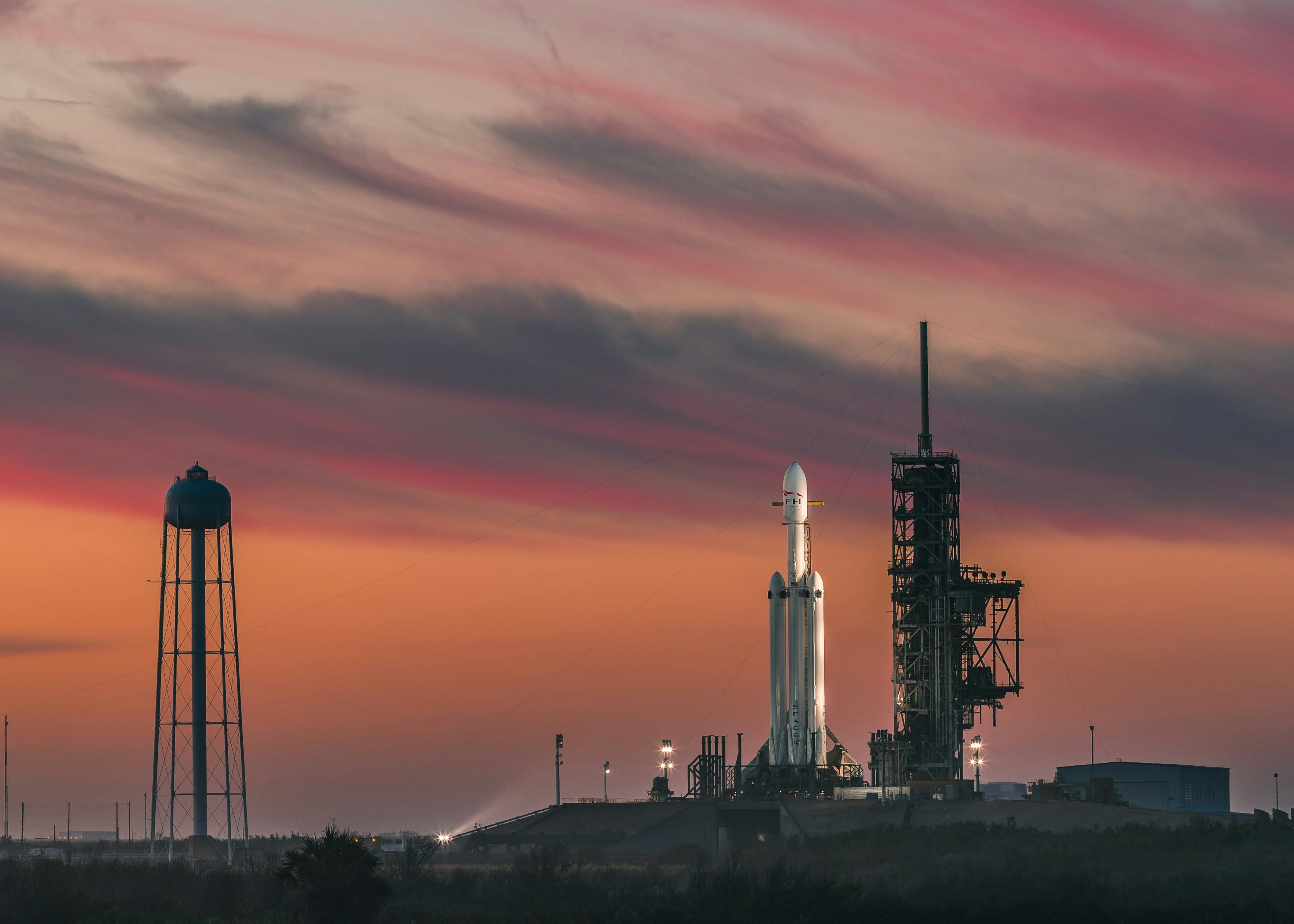
~160 people in Austin expected to make $100M+ on SpaceX IPO, ~12 expected to clear $1B (Molly O’Shea) → The SpaceX IPO will create more wealth in central Texas than any event in state history, but only cities positioned as destinations, not obstacles, will share it.
SpaceX is going public in June at something north of a $1.5 trillion valuation. When that happens, about 160 people in Austin could stand to gain $100 million or more and a dozen will clear a billion. Money is about to land in central Texas at an unfathomable scale. Here’s the opportunity: new billionaires (particularly in tech) don’t sit on their money, they start funds, back projects, and build new companies. San Antonio sits 80 miles south of where most of it will live, and that’s a real advantage. We could be on the receiving end of some of that new wealth. Tomorrow’s next big company could be funded by this IPO, but only if we compete for it.
San Antonio approves veteran housing protections despite clashes over landlord exemptions (TPR) → Some policies sound good but don’t move the needle. Mayor Jones’ VASH policy seems more symbolic than effective.
Mayor Jones planted her flag on a nice-sounding housing issue: stop landlords from denying leases to veterans using VASH vouchers. Sounds great. She got it done, albeit with carve-outs that watered it down. A few problems. One, there’s no proof veterans face this discrimination. San Antonio’s VASH acceptance rate is 95%, per Councilwoman Teri Castillo, in a market the landlord lobby itself puts at 81% occupancy. Of ~2,000 voucher-holding veterans, nearly all are placed; the rest, Castillo says, are held back by criminal history, credit, rental history, or expired vouchers—none of which this ordinance addresses. Per city staff, more than 1,000 Opportunity Home vouchers went unused in 2023, holders who couldn’t find or qualify for units. The other problem is that the real cost is downstream. Every new compliance hook becomes a tax paid by every renter. Mayor Jones has named housing affordability her top issue, but her signature housing action looks more like a tent-pole policy to show veterans how much she cares. Good politics, less-so policy.
More than 8k San Antonio kids will get vouchers. Many previously were enrolled at public schools (SA Report) → Ignoring the politics of the program, the local data is its own story and the status quo it points to isn’t working.
San Antonio’s districts have been shedding students for years. SAISD enrollment fell from over 56k in 2003-04 to 44.5k in 2021-22—a 21% decline that led trustees to close 15 campuses in 2024. Northside ISD is on track to be about 14,000 students below its 2019 peak of 107,800 and is carrying a $38 million deficit heading into next year. Against that backdrop, more than 21,000 SA-region families applied to the Texas Education Freedom Account program, and 8,676 got awards in the first round. About a third of SA applicants came from public school last year, well above the 25% statewide rate. Ignoring the politics of the program itself: more SA families are looking for education alternatives, at a higher rate than the rest of Texas. That reflects local conditions, not federal politics.
The Pick
Our weekly recommendation for what’s going on in San Antonio

Magic Tuber Stringband at Echo Bridge
Echo Bridge might be the strangest venue in San Antonio—a 1935 concrete arch over the river near the Mission Reach whose acoustics, completely by accident, sound like a concert hall. The Echo Bridge Appreciation Society sells maybe a hundred tickets a show, and you walk down a dirt path behind Tandem Coffee to get there.
This Sunday, May 17, they’ve got Magic Tuber Stringband—a North Carolina trio playing experimental old-time Appalachian music, with their new record Heavy Water dropping the following Friday on Thrill Jockey. Show starts at 7 & tickets are $20. If you’ve never been under the bridge, this is a good excuse.
- Chad Carey, Empty Stomach Group
Thank you for another week, and to the hundreds of new subscribers since last week—Welcome! Also new to us, our reporter, Jarrett Whitener, started yesterday. You can reach him at jarrett@thecivic.com for story tips or just to get in touch.
A particular thanks to our Charter members, whose continued generosity allows us to operate.
If something here landed, the most useful thing you can do is forward it to someone who should be reading.
See you next Tuesday.
- Philip Reichert
Editor, The Civic
Full disclaimer I worked for VIA for a short time and I am a big believer in public transit. VIA’s own rider survey shows that 71.6% of passengers are employed full- or part-time, and another 8.1% are actively looking for work. Two-thirds of VIA riders report household incomes below $25,000, and 66.6% ride at least five days a week. These are not hypothetical “future demand” riders. They are workers, students, caregivers, patients, grocery shoppers, and people trying to keep their lives moving in a city that has made car ownership feel almost mandatory. 
So yes, San Antonio should absolutely scrutinize an $800 million transit investment. Big public dollars deserve public accountability. But comparing bus rapid transit to an arena misses the whole point. An arena is a discretionary entertainment investment - that based on our experience in San Antonio has never translated in significant gains for working families. Transit on the other hand is how people get to work, school, medical appointments, child care, and public life.
It also leaves out a major fiscal fact: the local investment is what allowed San Antonio to compete for and secure hundreds of millions in federal transit dollars. VIA has already locked down a $267.8 million Federal Transit Administration construction grant for the Green Line, the largest federal investment in VIA’s history. VIA’s own announcement says the voter-approved 1/8-cent sales tax provides the necessary local match and operating funds for the Green Line. 
The same is true for the Silver Line. The Bexar County/VIA funding agreement helped close the local funding gap so VIA could seek federal matching funds; VIA has said that step puts the region closer to attracting $146.7 million in federal dollars for the Silver Line. In other words, the local commitment is not simply an $800 million local spend. It is the match that has already brought in $267.8 million for the Green Line and positions San Antonio to attract another $146.7 million for the Silver Line — $414.5 million in federal transit funding total if the Silver Line award is finalized. 
That is how infrastructure funding works. Cities that put up local match draw down federal dollars. Cities that do not leave money on the table for other communities to claim.
And these are not “just two bus lines.” VIA’s Green Line is designed to run every 10 minutes on weekdays, with dedicated lanes, traffic-signal priority, new stations, sidewalks, drainage improvements, and pedestrian crossings. The $481 million Green Line is fully funded, includes 25 new stations and 17 articulated buses, and is intended to connect the airport, downtown, and the South Side. The Silver Line would add an east-west rapid corridor from the West Side through downtown to the East Side, also designed for frequent service. 
The robotaxi comparison is not the best for your argument. A driverless car service covering part of the city does not replace a public transit system. It does not move the same number of people. It does not guarantee affordability. And it definitely does not solve the daily transportation needs of workers who need to be able to rely on predictable, low-cost service. Robotaxis are a technology product. Transit is public infrastructure. I don’t think we should confuse the two.
we already decided that San Antonio should spend public money on transit - in 2020, when voters approved the Keep SA Moving funding plan by more than 68%. It makes sense to finally build a system worthy of the people who already rely on it. Because God knows we’re not keeping up with growth and there’s no place to build more roads.
Calling this an $800 million bet on “two bus lines” makes it sound like the city is buying a very expensive hobby. I see this as an investment in time, access, reliability, and dignity for people whose commutes have been treated as invisible for too long. The CEO and board chair did a recent podcast episode on Beyond the Bite - I highly recommend listening to it to learn more.
San Antonio can and should demand strong oversight, clear performance measures, and honest cost controls. But this piece comes off like contempt, which is frustrating. A city that can spend decades subsidizing roads, garages, interchanges, ballparks, arenas, convention facilities, and private development can afford to build serious transit for the people who keep the city running.
Seems to me that more and better park and ride lots should be a part of the city’s mass transit plan.