



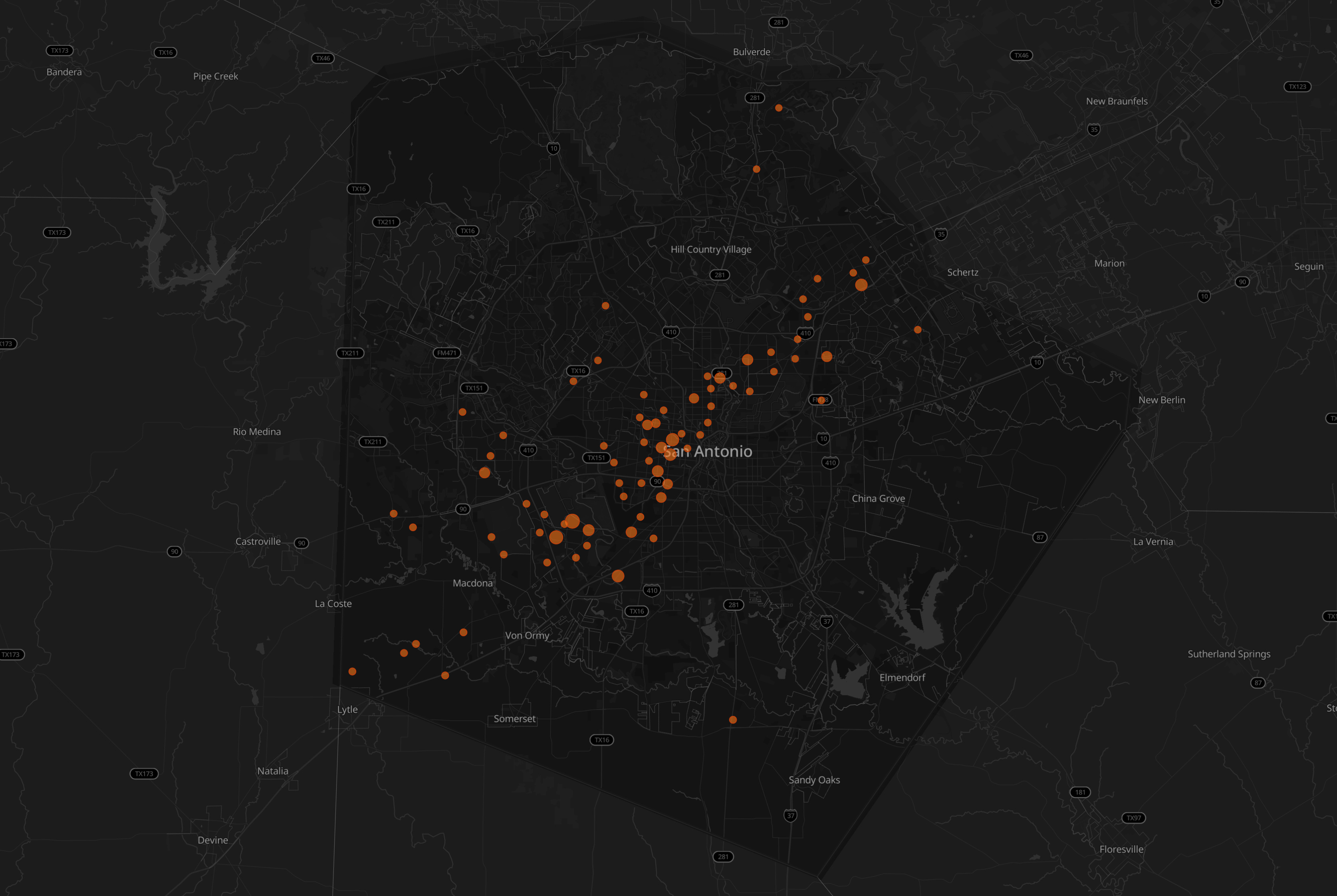
The storm that hit San Antonio on Friday night had winds gusting to 77 miles per hour, significant rainfall, multiple deaths, and it caused significant property damage as it moved through the area. By the time it passed, well over 100,000 people had lost power. As of Tuesday morning, there are still customers waiting for theirs to be restored.
With that as a backdrop, CPS Energy’s Board of Trustees convened yesterday afternoon for its monthly meeting.
Nestled in item 10 of their agenda was a performance update, featuring the word “unrecoverable,” which is how CPS describes its reliability performance so far this year. The data was worrying: their target for average customer power outage duration this year was 73 minutes, but the year-end forecast now sits at 94.16 minutes, with the declaration that the measure “is unrecoverable and will not achieve its year-end target.”
Is that bad? Well, looking back over the last couple of years, the average power outage ran 61.8 minutes in 2024 and then 75.4 minutes in 2025. For 2026, we’re looking at a forecast of 94 minutes, meaning the typical San Antonio outage is on track to be more than 50 percent worse in two years. The ‘reliability year’ was lost even before Friday night’s storm. But the storm happened anyway, and it is only the latest entry in what has become one of the worst stretches for CPS in recent memory.
In June, then-CEO Rudy Garza moved on to the Lower Colorado River Authority, leaving CPS under interim leadership. Then, in July, CPS was ordered to pay nearly $400 million to two pipeline companies over unpaid gas bills from Winter Storm Uri, while customers were already on the hook for a surcharge for the next couple of decades. Then, last month, Governor Abbott likened the utility’s 14 percent transfer to City Hall to a “slush fund” and made it a campaign promise to break up city-owned utilities.
Even the power plants are failing, with the same board agenda packet categorizing plant availability as “Unrecoverable” too, dragged down by errors like turbine and transformer failures as well as cascading repairs.
Why would CPS struggle so much in these categories? Well, it’s certainly not funding. In January of 2022, CPS raised base rates nearly four percent, its first increase in eight years. Two years later it tacked on another 4.25 percent, generating roughly $85 million a year (with over a quarter of it earmarked for “reliability and resiliency”). Even the tree-trimming budget nearly tripled after 2022, past $20 million a year. This year? CPS has already previewed a 5.5 percent increase, with more planned every two years through the end of the decade.
Meanwhile, CPS trustees also approved the regular transfer of revenue to the city, $51.3 million, bringing the fiscal year’s payments beyond a quarter of a billion dollars. The total transferred every year is around half a billion dollars and covers nearly a third of the city’s general fund, which council is preparing to shore up with the first property-tax-rate increase in more than three decades. In this way, your CPS bill is doing two jobs: keeping the lights on and keeping City Hall open, and it seems that only one is working.
Though to be fair to CPS, some of this is unavoidable. It’s expected that a major storm would be problematic, no power company manages hurricane-force winds completely unscathed. And the delay in restoring service is also not unheard of as the restoration work is logistically challenging and physically difficult, and despite that most customers were restored relatively quickly. The board packet also documents more than one thousand miles of vegetation trimmed this year and a long list of maintenance initiatives. Even chief strategy officer Elaina Ball’s explanation, offered to trustees in April, that there have been “more storms than we forecast” is true.
But this is the second consecutive year it has been true, and at some point, more storms than we planned for doesn’t cut it. Storms are not a surprise in South Texas. As it stands, CPS keeps missing on key targets even as it pulls in tens of millions of dollars more for it every other year.
So, yes, CPS is having a tough few months. Let’s not blame the storm, though, because many of these problems are earned. The $400 million judgment is for gas CPS contracted for and then refused to pay, the surcharge is for fuel CPS bought, and the reliability deterioration is measured by CPS against CPS's own targets, managed with its own money, over two years.
Ultimately, this was a year that CPS Energy built for itself, and it is going to ask you for a raise to fund the next one. We would do well, though, to remember that this is what more money bought us.
CPS is in a tough spot. Its shareholder is the city of San Antonio, whose leadership is dependent on the 14% royalty AND, at the same time, generally resists rate hikes that tend to irk constituents. Unreliable energy also irks constituents. Reliability is not costless. No one talks about CPS's AA-/Aa2 credit ratings on growing debt. This matters a great deal in the context of the cost of reliability (from adequately staffing crews to purchasing new peakers, as CPS did last year from Proenergy), pressure for affordability, and the 14% royalty. The ratings are "Stable" for now, but I would think a downgrade would cost about 20bp - do the math on $10+ bil of debt on top of higher interest rates - not insignificant. Inflation is real, especially in power equipment, from gas turbines to copper, and Trump's tariffs have exacerbated the problem. I believe CPS's management understands this, but educating the city's leadership and the public depends on their willingness to invest the time to understand them. Tradeoffs will inevitably have to be made.
“Why would CPS struggle so much in these categories?” — This is a good question that merits further investigation and analysis.