



Corporate welfare is bad policy. It rewards political leverage, transfers public money to wealthy private interests, and it’s difficult to measure the impact. Despite this, Project Marvel is one of the rare cases where corporate welfare is necessary.
It is tempting to oppose subsidy entirely. The Spurs are a multibillion-dollar business—it seems entirely reasonable to dig in our heels and force them to pay. But businesses have to remain viable, and the math has to work for them.
Asked directly why the Spurs cannot fund their own arena, Peter Holt told KSAT in October that "we're the 27th out of 30th in market size in the NBA." More than half of team revenues are tied to the home market and those revenues are a direct function of the underlying economy. Among NBA cities, San Antonio is 26th in per capita income, 21st in Fortune 500 companies, and 24th in GDP. Despite that, Sportico values the team at $4.5 billion, 21st in the league. The economic figures are worse than the valuation rank, which implies that the franchise outperforms its market because of operational discipline, not because the market supports it.
This creates a real financial pressure on ownership. Austin, Seattle, Las Vegas—cities dying for an NBA franchise—all rank higher on the economic metrics that determine the profitability of the team. To put it simply, the Spurs would be worth hundreds of millions of dollars more if they moved. The Holt family seems to have no interest in moving, but a different ownership group with no roots here and the same valuation math in front of them would not hesitate.
The math shows that if we want to be an NBA city, we have to help pay for the arena. Of the five least valuable franchises in the NBA, four play in publicly owned, publicly built arenas as tenants. The fifth, Detroit, plays in a publicly owned arena that took roughly a third of its construction from taxpayer-backed bonds and lets the operator keep all arena revenue. In fact, the overwhelming majority of teams in the bottom 15 of valuation play in arenas that received significant public funds. This is the entry cost that every comparable market has had to pay.
Teams that built with private money, like the Clippers, built their arenas in entirely different markets and with different resources. Steve Ballmer is an ex-Microsoft billionaire who privately financed the $2 billion arena project himself, and he did it in the second-largest media market and economy in America. The economics are different in markets that size. Whatever the Intuit Dome proves, it does not prove anything about a small-market arena in South Texas.
Voters remain genuinely split on Project Marvel, but there is a difference between disagreement over public funds and misunderstanding the stakes: whether San Antonio remains a city with an NBA franchise.
The real failure of governance is that San Antonio is negotiating from this position because San Antonio has earned this position. Twenty years of insufficient employer growth, stagnant median income, and a thin roster of corporate customers for arena suite deals put us at the bottom of the NBA market.
We need to make Marvel work. Walking away from a deal where a highly successful franchise is accepting hundreds of millions less than another market would pay doesn't make us more prosperous. The Spurs wouldn’t be the first big institution to leave, and more would follow if they left.
The work of the next 20-30 years is to build the city the market wants, on our own terms—so the next time we have this conversation, we have it from a position the math actually supports.
Editor’s note: An earlier version of this piece referred to 'median income' where the underlying data is per capita personal income.
The Reframe
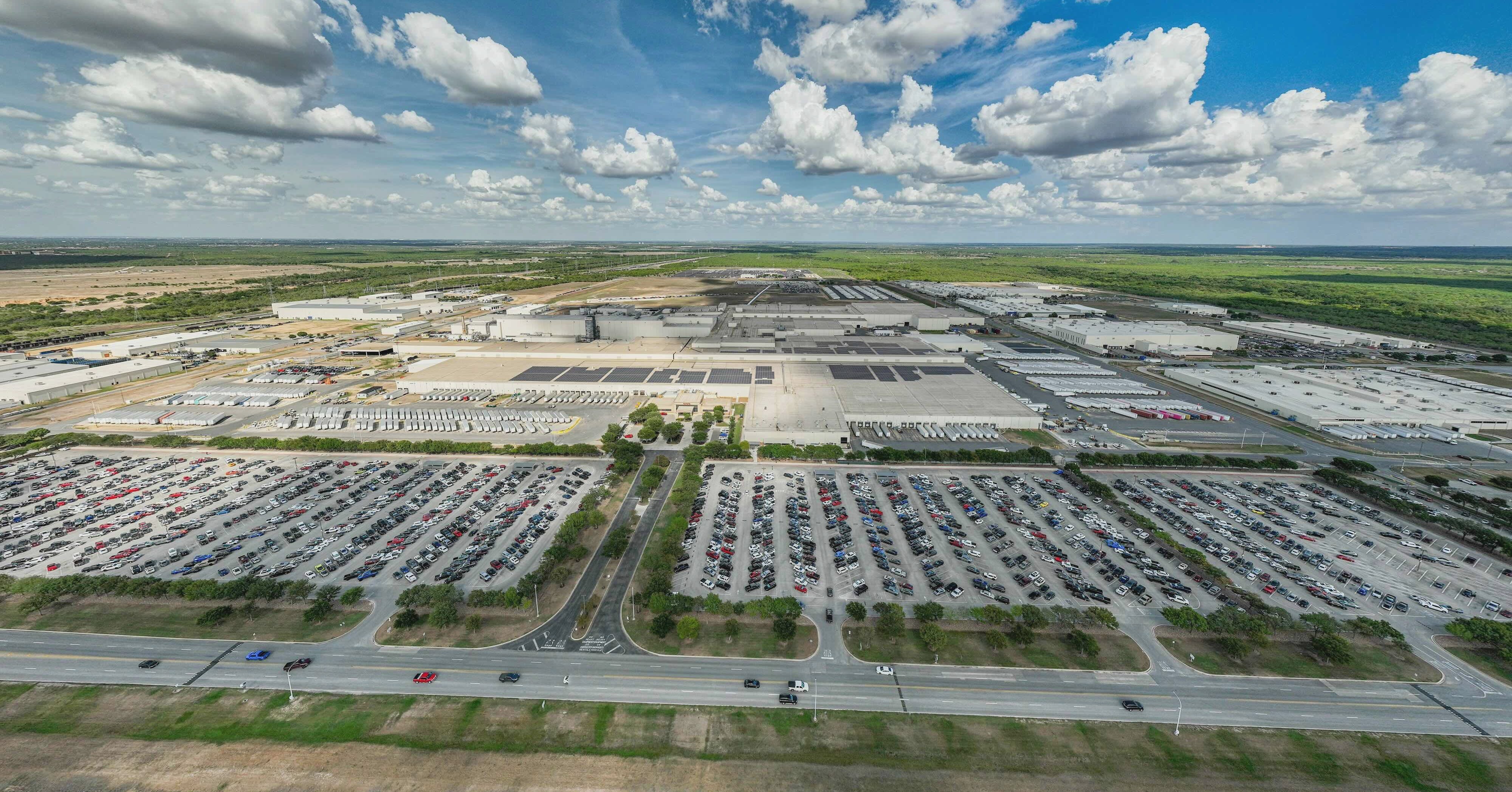
Toyota files plans to expand manufacturing plant in San Antonio (KSAT) → A $2 billion, +2,000-job expansion at the South Side plant is a real win for San Antonio and the economic development teams that landed it.
Toyota's "Project Orca" will add a new assembly line with 2,000 well-paying jobs, plus an average of 600 construction jobs a year from 2026 through 2030, with production beginning in 2030. It may seem inevitable, as Toyota “is already here,” but deals at this scale take years of sustained relationship work to land. Credit to greater:SATX, the city's Economic Development Department, and everyone who kept Toyota engaged & brought this expansion here rather than to another plant in another state.
San Antonio soon to overtake spot of nation’s sixth-largest city, and Philly is crashing out about it (SA Current) → Humor aside, Philadelphia isn’t worried about San Antonio.
We are experts at leveraging statistics to tell the good story. Census data shows that the population of the City of San Antonio proper is on track to pass the population of the City of Philadelphia. It’s a good story, and people are taking it seriously enough in the Instagram replies, but it’s misleading. The Philadelphia metropolitan area has a population exceeding 6 million people, over double the San Antonio metropolitan population of around 2.5 million. The GDP figures are more dramatic: Just shy of $560 billion for Philadelphia and $190 billion for San Antonio—that’s nearly 3x our total economic output and a roughly ~20% advantage for Philadelphia in per capita prosperity. Our population growth is great, but it must be paired with economic growth as well.
San Antonio City Council members call for audit of police overtime (SA Current) → We applaud financial scrutiny for how public dollars are spent. This should be the default posture.
SAPD's adopted overtime budget last year was $17.7 million yet the actual spend was $34.4 million. The department roughly doubled its own overtime budget, and only now—twenty years after the last comprehensive audit, in the middle of a $150 million budget shortfall—is the council asking what the books look like. We commend the councilmembers for looking for financial transparency, but we wish this was the default posture rather than the kneejerk reaction to a higher-than-expected bill. That shouldn’t come across as anti-police, anti-spending, or anti-anything—it should be the norm for use of public funds.
The Pick
Our weekly recommendation for what’s going on in San Antonio

Eva Marengo Sanchez at the Ruiz Healy Art Gallery
Eva Marengo Sanchez is a San Antonio-based painter, and this is her first solo show at Ruiz-Healy Art. The work is still life done with Old Master technique—meticulous oil on canvas—on subjects you’ll recognize from around here: pan dulce on the breakfast table, HEB and La Michoacana bags after the grocery run, flowers in a repurposed jar, tacos wrapped in foil. The titles tell you what kind of show it is: “Mom and Dad’s House,” “Mom’s beans,” “Here for two seconds,” “Are you sure it’s not allergies?”
The opening reception is Wednesday, May 20, from 6 to 8 PM at the gallery’s Olmos Park space (201-A East Olmos), with the artist in attendance. The show runs through August 22 (Wed–Sat, 11am to 4pm). Worth the trip.
- Chad Carey, Empty Stomach Group
Thanks for another week, and welcome to everyone who’s joined us since Brief #2. Remember to follow us on your social media of choice: X/Twitter, Linkedin, Instagram, and Facebook. Story tips and reader notes can go to our reporter Jarrett Whitener at jarrett@thecivic.com, and my personal inbox is always open.
A particular thanks to our Charter members, whose continued generosity allows us to operate.
If something here landed, the most useful thing you can do is forward it to someone who should be reading.
See you next Tuesday.
- Philip Reichert
Editor, The Civic
All great analysis except that so-called "economic development" has never been practiced nor has it been defined. All those who abuse this concept have never practiced the CED profession, where such "wicked challenges" are critically examined. BREAKING NEWS: Concepts do matter.
Everyone assumes that ED is equivalent to business development, which is not the case. The commercial real estate industry has taken an important concept from the CED paradigm and used it to refer to commercial real estate development, heavily subsidized by public resources.
Why haven't we seen expertise with respect to SA's intervene structural poverty, impoverishment and economic segregation, given that we had "the best city Manager in the country" for 14 yrs? Given that "community representation" at the policy table the past 50 yrs have consisted of "progressive", "grassroots", "people of color"? Where is this critical analysis by our community leadership, our academics from Trinity U., UTSA, and St. Mary's, and from our "watchdog" press?
Merely subsidizing business investors and developers is not "economic development"; subsidizing "job creation" and "expanding the tax base" is not "economic development". Subsidizing the Spurs reveals much more than has ever been understood from a governance and foresight perspective, a metric SA has recently earned a "below average" score, ranking #151 overall in the U.S. out of 25O cities. SA is a city which does not value transparency or accountability, yet has unrealistic aspirations beyond its reach.