


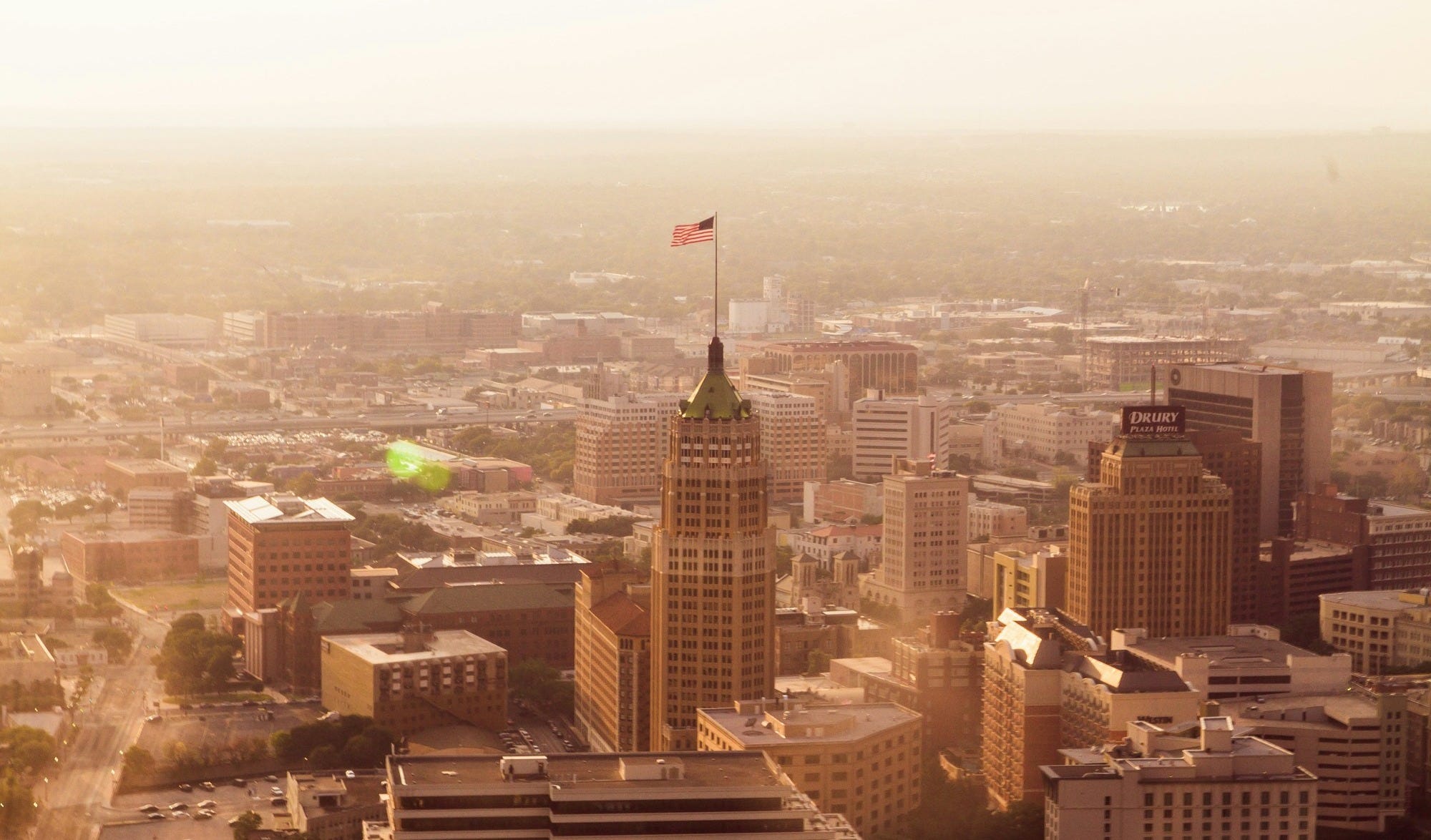
Texas is in the midst of an economic transformation. Dallas–Fort Worth is emerging as a global financial center, Houston remains the world’s energy capital, and Austin is an international name in technology and venture capital.
And then there is San Antonio. Growing, charming, full of promise, yet increasingly at risk of being left behind.
No doubt our metro is expanding. Subdivisions are pushing farther out, construction cranes continue to rise, traffic increasingly thickens. But the other Texas Triangle cities are successfully converting their growth into prosperity, seeing higher wages, greater educational attainment and stronger investment. San Antonio is adding people, jobs and buildings, yet far too many San Antonians are not getting ahead.
This is the hard truth that we must face honestly, or else we cannot change the future we are creating.
Tourism, hospitality, retail, government, healthcare and construction power our economy, and they’re driven by hardworking people. But too much of our workforce sits in roles where even full-time workers struggle, while competitor cities create high-paying jobs in technology, finance, engineering and biotechnology.
Our challenge begins with education. In too many of our K–12 schools, students cannot read or do math at grade level. Too few finish high school or earn degrees—and too many who graduate from our colleges and universities choose to build their futures elsewhere. That’s on us and employers notice. After all, investment follows talent. Companies choose cities by the depth and quality of their talent pipelines, not raw population counts. Without a superior and sustainable talent pool, the most valuable job opportunities (and the companies that create them) will and do go elsewhere.
The absence of corporate power in San Antonio compounds the problem. We lack a concentration of corporate headquarters—which boosts local economies by attracting direct flights, superstar talent, strong suppliers and quality investment, increasing philanthropy and, above all, concentrating decision-making power. The best jobs and biggest investments follow company leadership.
Lacking corporate power, to recruit new companies we have for decades sold affordability as our biggest advantage. But when low cost becomes a city’s identity it becomes a trap: employers come for cheap labor rather than talent, and low wages leave working families unable to get ahead. Population growth masks that weakness. Yes, new residents stimulate our local economy, but lasting prosperity comes only from producing and trading our own San Antonio–made products and services beyond our region and bringing new wealth home.
San Antonio is not stagnant. It is growing, but far below its potential. In a booming Texas, underperformance is another form of falling behind.
But that is only half the story.
Few American cities combine our strategic location, cultural identity, lifestyle and room to grow. The problem is that we have yet to turn these assets into prosperity at scale.
We sit at the crossroads of Texas and Mexico. But, despite this geographic advantage, and as integrated supply chains grow in North America, we have yet to become the continent’s command center for binational research, manufacturing, trade, finance and logistics. Advanced manufacturing should anchor that ambition—Toyota and JCB proved we can win major manufacturing projects; now we must go after related financial, engineering, research, design and corporate operations that add greater value.
In cybersecurity, we have a foundation few regions can match, yet we still have a lot of work to do to rival the strength of the top cybersecurity hubs in the US. In medicine and biotechnology, our institutions give us rare strengths. The challenge, however, has been in turning research and healthcare into patents, therapies, companies and high-paying jobs.
One seldom-acknowledged aspect of our workforce shortcomings is our military brain drain. Each year thousands of highly talented service members leave active duty with expertise in many fields, but take it elsewhere for lack of a clear path into our local private sector. Retaining them should be a central economic development priority.
The infrastructure of prosperity is also intellectual: our many universities and colleges can put us on the map by attracting the best students, faculty and researchers. But talent stays only where opportunity meets quality of life—this is why focusing on excellence in public safety, recreation, arts and entertainment, public transportation and the like is of the utmost importance.
But talent and industry are not enough: the next economy will go where reliable and affordable energy and water can support it, and securing both for the long term can be one of our strongest advantages. The pieces are here but we must align them and come together to execute, with urgency. That requires a different playbook.
Our economic development leaders have identified the right high-growth industries to target. What is missing is focus and alignment behind sectors where we can lead. Alignment must not mean countless feel-good meetings and ambiguous annual reports, fruitless trade missions, misaligned marketing efforts and clichéd slogans. We must operate from one strategy and answer to a public scorecard of objective results: headquarters attracted, capital invested, jobs created, patents turned into products, graduates created and retained, workers moved up into family-supporting careers. Otherwise we are measuring activity and not real progress.
Economic decline rarely arrives as one dramatic event; it creeps in until lower expectations feel normal. A child drops out of school. A graduate does not return. A company chooses another city. An invention finds investors elsewhere. A city service is cut. A restaurant shuts down. A military command leaves. Each loss compounds into the difference between a city that advances and one that falls behind.
To that end, good governance is an economic asset. Investors demand fairness, stability, predictability and transparency in local government—not partisanship or ideology. They expect elected officials to work with them and not against them. If every major issue becomes a fight, or if our companies feel constantly under attack, stonewalled or ignored, our competitors will gladly take them from us while we argue. A city consumed with dividing limited prosperity may never create enough to share.
This is the vicious cycle—polarized leadership, weak schools, thin talent pipelines, scarce investment, low wages, systemic poverty pressing back on schools—and it will not break itself. The entire region must agree on what matters and act in harmony and with purpose.
San Antonio does not have to become DFW, Houston or Austin. It must become a stronger, more ambitious, more united, more prosperous version of itself. We have what it takes. What we no longer have is time to confuse growth with prosperity.
History will not judge our generation by how much our city grew, but by whether our leaders had the vision, skills, maturity, discipline and courage to turn growth into lasting prosperity for all.

This is an excellent analysis. The author hit the nail on the head when he writes about the importance of exporting products and services, bringing outside money into our economy. I have witnessed "tipping points" in communities countless times over the years in areas where I've lived. Prosperity comes from the private sector (public sector transfers go only so far), and when companies feel they're at a competitive disadvantage in a community, they will leave and take their jobs with them, adversely impacting property values, tax revenues, public services, schools systems etc. - the spiral of decline. I sense SA is not near a tipping point now but closer than it should be (one major corporate relocation or base closure away?), and all hands need to be on deck. It comes down to leadership, which is concerning when one looks at the discord between the mayor and the city council.
One of SA's advantages may now be proximity to Austin. This is not a perfect analogy but food for thought: I spent my career in NYC but lived in suburban CT; Our town's leadership understood that facilitating commuters (in our case, via train service) allowed people to earn high NYC incomes and then spend it in our community, propping up everything from local businesses to schools. Facilitating transportation to Austin, however it can be reasonably done, could make a difference.
It is also absolutely true that companies will go to where they can find talent. Witness Citadel moving forward (so far) with a major NYC office building despite the grief Ken Griffin has received from NYC's new mayor. I'm asking myself: What can I do to help the city, particularly with educating young people, helping them with financial literacy and creating a sense of urgency to take control of their destinies in a rapidly changing world?
I hope the topic Mr. Pablos has so eloquently written about stays in the forefront as it matters a great deal to the future of the city and its citizens.
Solid article. San Antonio kowtows to the lowest common denominator, basking in its own mediocrity. What economic highlights are there? Toyota plant in 2003... then... crickets. Plenty of tourist attractions from the past attract visitors; the Alamo: 1718. The Riverwalk: conceived in the 1920s. What's attracting folks to work here and not just visit? That remains the question.