


San Antonio has a growing population, affordable housing (yes, it’s true), no state income tax, high quality of life and a rich culture. We have what a city needs to grow. We are not growing. Well, at least not anywhere close to other Texas cities.
Between 2012 and 2022, Austin added jobs at more than twice our pace. Dallas-Fort Worth added them roughly a third faster. In economic terms, Austin’s GDP grew 39% from 2018 to 2023, nearly twice as fast as ours. We are the slowest-growing major economy in the fastest-growing large state in the country.
San Antonio saw big population growth in the year post Covid, but things are slowing down. In 2026, property values have stagnated, sales tax revenue is falling, and home prices are dropping after a long run-up. The city just closed a $21 million gap in this year’s budget through spending cuts and fee hikes, and is facing a $152 million gap next year. Council is now talking about raising the property tax for the first time in over three decades. All while the San Antonio homeowner already pays among the highest property taxes in Texas.
It isn’t just the city. SAISD has lost 20% of its students over the past two decades and closed over a dozen schools. Northside ISD lost over 10,000 students and faces a $35 million deficit. Across the area, school districts are shrinking, closing buildings, and cutting staff because there aren’t enough families.
This is what stagnation looks like up close: a slow but lethal drain that shows up in your property tax bill and closes your kid’s school.
And, the fix seems to be more taxes. But, the more we take from residents, the less competitive we become in the one category we really have going for us: San Antonio is affordable. That is a huge part of our pitch—affordable for families and affordable to operate a business in a good city with no state income tax. Every fee increase and every tax hike chips away at the only advantage we’re actually selling.
What we need is more jobs and more opportunity.
The employers that once anchored the city’s tax base like Rackspace, USAA’s banking arm, and Tesoro have downsized, relocated, or been acquired out of town. The jobs replacing them are less competitive. San Antonio is adding jobs in aggregate but not gaining the kind of jobs that fund a city, and not doing it at the pace of a true dynamic economy.
Austin doesn’t have this problem because Austin has jobs at scale. Since 2018, Austin has attracted 81 corporate headquarters relocations. Dallas got even more. San Antonio didn’t make the list. When good jobs show up, people get hired, buy houses, fill schools, and spend money. More jobs means more homes and more revenue, and no one has to raise anything. Austin’s revenue doubled without raising rates—in fact, they lowered theirs. We’re raising fees to close a gap that grows every year.
Yes, we know we don’t want to be Austin. But we can’t ignore that the growth engine is slowing. The job of city leaders is to make sure the city creates opportunity for its residents. That is the job. Without growing opportunities, a city will decay. This role cannot be delegated to a partner organization and crossed off the list. San Antonio’s elected leadership has spent the last decade treating job creation as someone else’s department—a mission to fund and a brand to support, not the central function of running a city. And growing the job base is not just about courting employers from elsewhere. It is about building the conditions that make new jobs form here in the first place. Both halves are the work, and both halves belong to the people voters elected.
We do spend on these efforts. But the results are mixed at best. $200 million on Ready to Work, which placed around 5,000 people in “approved” jobs at an average salary of $45K—in mostly truck driving and call center work. $802 million committed to two bus lines in a city built entirely around cars. $150 million in affordable housing bonds. Tens of millions in nonprofit grants. What is actually working? What would we stop doing if we had to choose? And what would we do instead to grow?
These are the questions not enough people are asking. At the core: how do we grow? It is beyond dispute that when growth and jobs come, incomes rise, the tax base expands, and the city can invest in schools and streets and the things that make a place worth raising a family in. That is what flourishing looks like. Austin is living it. Dallas is living it. San Antonio is watching.
Stagnate, raise rates to cover the gap, erode the cost advantage, watch jobs and families choose elsewhere, and raise rates again. That cycle has a name in other cities. Detroit. Baltimore. Portland.
San Antonio has everything it needs to grow. Growth just requires choosing it—and so far, we haven’t.
The Reframe
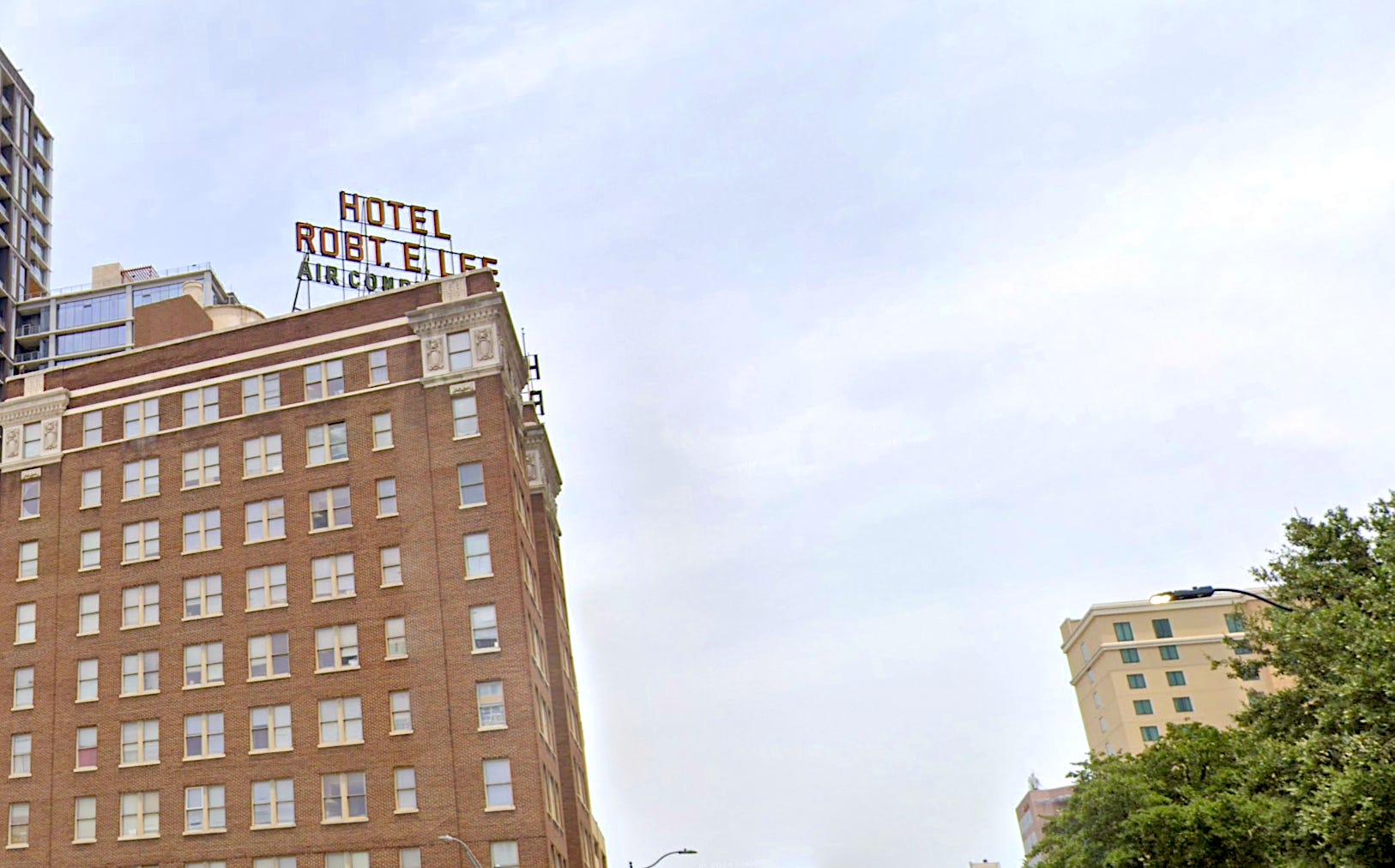
City Council approves $4.5 million for Robert E. Lee renovations (Business Journal) → Subsidized housing is the wrong answer to the right question.
San Antonio doesn’t have an affordable housing problem. San Antonio has an income problem that looks like an affordable housing problem. A handful of subsidized units at six figures apiece doesn’t move the affordability needle in a city where the median home already costs less than most of Texas, and there is plenty of dirt-cheap housing available. What this does is burn civic capital on a symptom while the disease—an economy that isn’t competing with the rest of the Texas Triangle—compounds. If the goal is for more San Antonians to afford homes, the answer is more $75K jobs, not more subsidized apartments. If the goal is truly more & more affordable housing, the solution is simple: build more. Just ask Austin.
Mayor Gina Ortiz Jones outlines tough choices ahead in State of the City address (SA Report) → Mayor Jones is governing as an economic development mayor despite not running as one.
Good. That's the job. The problem is that the city has been late to it for twenty years. For decades, economic development in San Antonio has been treated as something the mayor supports. It has not been treated as what it actually is: the most important function of municipal leadership, because it is the one function that determines whether every other function is funded. Jones is inheriting the consequences of that delegation and appears to be taking the job personally. The Civic’s position: this is the correct posture, and the measure of success is whether San Antonians are more prosperous three years from now.
OLLU to offer no-cost master’s program starting this fall (SA Report) → A shrinking university makes a smart bet on jobs.
OLLU's new free master's program is being covered as a feel-good story. It's actually something better: a shrinking institution making a clear-eyed decision. Enrollment is down nearly 300 students since 2023, and a dozen undergraduate programs were cut last year. Against that backdrop, the university is doubling down on five graduate tracks across business, cybersecurity, nonprofit management, and social work, and giving them away to students who'll actually finish. All five have direct employment pathways in San Antonio's existing economy. Charity doesn’t always materialize as opportunity, but if these students are funneled into higher paying jobs, this just might.
The Pick
Our weekly recommendation for what’s going on in San Antonio

I Still Love San Antone
Garrett T. Capps—San Antonio’s musical ambassador and founding partner of The Lonesome Rose—has released I Still Love San Antone, his most gonzo record to date. It features Santiago Jiménez, Jr., the late, great Augie Meyers (of the Texas Tornados), and Paul Leary (of Butthole Surfers).
He’s throwing the release fiesta Saturday, May 9th, at The Lonesome Rose. Free admission, with Santiago Jiménez, Jr. opening. If you want to know what makes San Antonio music San Antonio music, it’s a damn good place to start.
- Chad Carey, Empty Stomach Group
Thank you for reading our inaugural newsletter. The Civic exists because San Antonio deserves a weekly publication that asks the questions above out loud—what’s working, what isn’t, what we aren’t talking about. Every Tuesday from here on, you’ll get one argument, one Reframe of recent coverage, and one reason to leave the house.
A particular thanks to our Charter members, whose generosity made this launch possible.
If something here landed, the most useful thing you can do is forward it to someone who should be reading.
See you next Tuesday.
- Philip Reichert
Editor, The Civic
Is "San Antonio" the city or the
metro region? In socio-economic terms, it's the city, in glowing business development terms, its the metro. In a recent Prosperity Index report, SA ranked #151 out of 250 U.S. cities; in Governance and Foresight metrics, we ranked "below average". Why is this the case after all the boosterism in being a "rich culture" and "Military City, USA"?
We lack transparency and accountability. Under a minority-majority policy Council the past 50 yrs, and having had the "best city Manager in the country" for 14 yrs, SA went downhill in socio-economic terms. Why did this happen?
The more things change, the more they remain the same.
Very well thought out piece Philip, and well written too. Our economy has changed, especially with the loss of Texas Titans of Industry who started businesses here and grew them exponentially and it appears, that unlike Dallas, Austin and Houston, we have not adapted as well to the changes in our economy.