



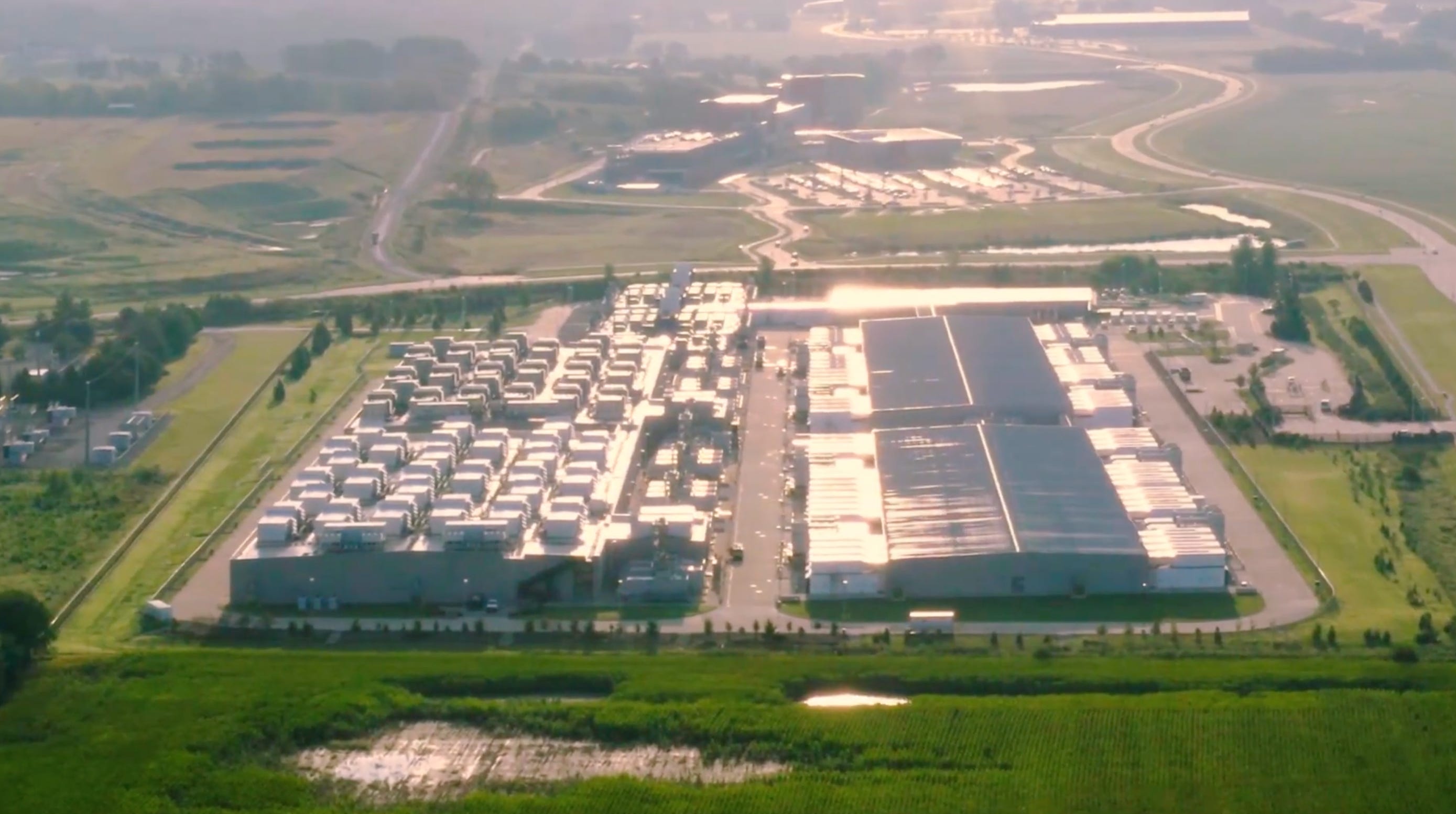
San Antonio City Council has approved a Unified Development Code (UDC) amendment that gives council final approval over all new data center development within city limits.
On Oct. 29, council members considered four potential amendments regulating data centers:
A city staff recommendation
A recommendation based on previous council discussions
A recommendation from Mayor Gina Ortiz Jones
A recommendation from the Oct. 20 Zoning Commission meeting
After debating the options, council approved the second recommendation, which requires all data center developments to obtain a specific use permit (SUP) from City Council and limits their location to designated industrial zoning districts.
Under the amendment, council may impose additional site plan requirements, including:
Minimum distances from certain uses
Landscaping and setback requirements
Ingress and egress limitations
Noise barriers for generators
Parking and signage standards
The amendment also prohibits data center development over the Edwards Recharge Zone District (ERZD).
City staff noted that while the amendment gives council flexibility when reviewing individual projects, it lacks predictability and consistency because approvals depend entirely on council discretion.
The UDC initiative was spearheaded by Ric Galvan (D6), who pushed for data center-focused discussions in October 2025. According to city staff, District 6 contains the majority of data centers within San Antonio city limits, in addition to facilities located in unincorporated Bexar County.
“Now is the opportunity for the city of San Antonio, the city council, to be the first major city in Texas to take action on data center regulations to ensure that our residents have a voice in any new data centers coming to San Antonio,” Galvan said.
In addition to the SUP requirement, council approved two other amendments: one establishing a formal definition of data centers and another allowing council to impose distance restrictions between data centers and UNESCO World Heritage Sites, including the San Antonio Missions National Historical Park.
Councilmembers Misty Spears (D9) and Marc Whyte (D10) were the only members to oppose the SUP requirements. Both favored the recommendation from the Oct. 20 Zoning Commission meeting.
That recommendation proposed a hybrid approach, allowing data centers by right in industrial zoning districts if they met specified conditions. Projects that failed to meet those conditions would require a SUP from council. Whyte introduced the proposal, but it failed to gain support amid concerns about allowing certain developments without council approval.
Whyte argued that requiring individual council approval could push developers toward neighboring communities with more predictable regulations. He also cited the economic contributions of San Antonio’s data centers, which account for more than $3 billion in taxable value and generate approximately $8 million per 100 megawatts of use.
“I respect my colleagues that believe we need a specific use permit for every use, but I disagree,” Whyte said. “If we tell companies that even on heavy industrial land, land we zoned exactly for this kind of use, that every project is going to get decided on a case-by-case basis, we’re telling them essentially that the rules are not written down. They get made in this room, one vote at a time. That isn’t a standard. It’s uncertainty.”
The new requirements will also affect existing data center operators. While current infrastructure will be grandfathered in, expansions and future development at existing sites will require council approval.
Mayor Jones’ proposed restrictions
Mayor Jones also introduced a UDC amendment requiring an SUP for all data center projects, but her proposal included additional development standards that were not included in the approved version:
Public notices and meetings
Noise limits of 63 dBA during the day and 56 dBA at night
A minimum 1,000-foot setback from property boundaries, consistent with requirements for detention facilities
Replacement of twice the greenspace used during construction
Municipal air quality monitoring and reporting in accordance with Texas Commission on Environmental Quality (TCEQ) standards
Enclosed backup generators to reduce noise and air pollution
“These are common-sense things. None of this is, frankly, novel,” Jones said. “This is exactly what other communities that are further along in their data center journey have pointed to: transparency, the need for more transparency on these things; the need to protect public health; and the need to protect property values.”
Despite disagreements over the extent of regulation, council members and the mayor agreed that San Antonio needed clearer standards and legal definitions for data center development.
The Oct. 29 vote establishes the city’s initial regulatory framework, though future councils could revisit and expand the requirements. For now, the approval process places significant discretion over the future of data center development in San Antonio in the hands of the sitting City Council.