



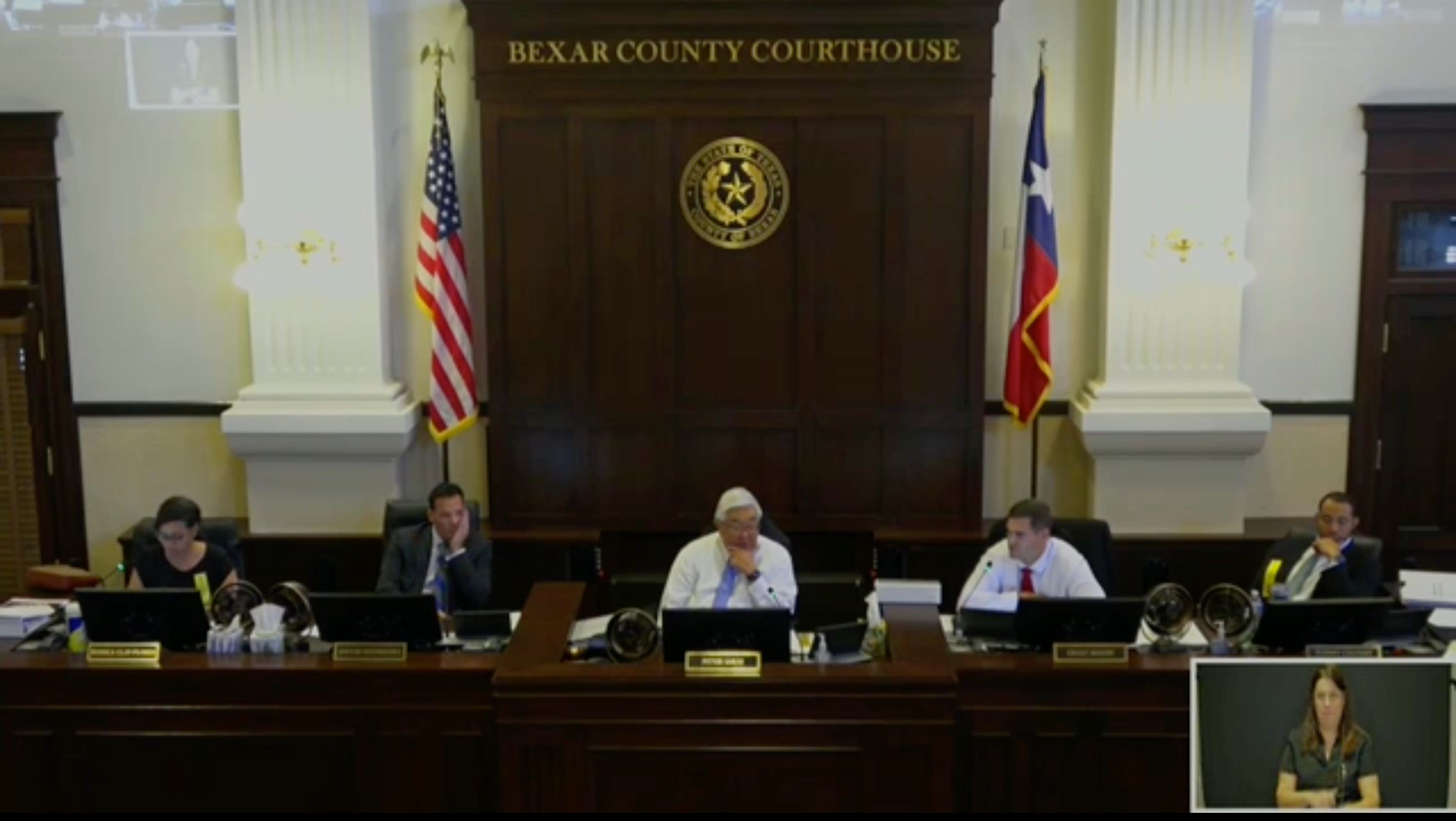
Bexar County leaders do not intend to propose a tax rate increase in the next budget, but warn that an increase could be necessary in coming years.
On Aug. 18, county commissioners were presented with the proposed fiscal year 2026-27 budget, keeping the tradition of no tax rate increase in more than 30 years.
Maintaining the current tax rate of about 30 cents per $100 of taxable value will generate nearly $3.67 million less in property tax revenue than last year.
Over the next three budget cycles, the county had projected a $145 million deficit. That projection has since been reduced to about $42 million, according to county staff.
The proposal
Like the City of San Antonio, Bexar County will see a decline in property tax revenue in FY 2026-27. Budget and Finance Director Tonya Gaitan said property taxes make up about 80% of general fund revenue, so declining property values will constrain the budget.
Existing property values decreased by $10.3 billion, while $7 billion in new value was added, resulting in a net decline of $3.3 billion. Of the new value, about $4 billion comes from residential properties, $1.3 billion from commercial properties and $1.7 billion from other properties.
County staff recommends shifting about $20 million from the Flood Maintenance and Operations Tax Rate to the general fund. Gaitan said the change would not negatively affect flood programs because the fund has enough reserves to maintain operations.
The tax rates will support the county’s more than $2.61 billion operating budget. Major components include nearly $905 million in operating expenses and about $565 million for roads, flood projects and other capital projects.
The proposed budget is down from the $2.8 billion adopted budget last year, Gaitan said.
The changes
The proposed budget does not include cost-of-living increases for employees and cuts about $26.7 million from departmental requests. This year, county departments requested 240 new positions, while the proposed budget approves zero net new hires.
“Within the general fund, we are not recommending any new net positions,” Gaitan said.
In December, federal American Rescue Plan Act funds allocated during the COVID-19 pandemic will reach their deadline. Line items funded through those grants will become “contingencies,” which commissioners will consider continuing during future budget workshops.
County Manager David Smith called the budget one of the more challenging he has faced because of declining property tax revenue. Although the upcoming budget is balanced, he warned that future budgets will likely face deficits requiring difficult decisions, including additional departmental cuts or tax increases.
“One of the reasons I’m here today submitting a budget that is built on no change in the tax rate is because I do want the court to begin to consider what I believe will be major challenges that you will face in the future, and they may well require revenue enhancements, significant revenue enhancements potentially,” Smith said.
Smith also pointed to growth in the county’s unincorporated areas, where development will require new infrastructure and flood-safety projects. He said those projects carry significant costs that cannot be financed at the current tax rate.
During a presentation on long-term financial forecasts, Gaitan said earlier projections showed a $145 million deficit in FY 2028-29. For FY 2026-27, the county’s strategy has been to slow spending growth rather than make significant cuts. Under that approach, the projected deficit has fallen to $42 million in FY 2029-30, pushing the shortfall back a year.
Even with the proposed budget, the general fund will require $30 million in recurring new revenue or recurring expenditure cuts in FY 2027-28, Gaitan said.
Commissioner comments
Precinct 3 Commissioner Grant Moody said he will not support a tax rate increase and is concerned about the county using its reserves.
“As long as we are tapping into those reserves, then we are spending more than we are bringing in,” Moody said.
Precinct 4 Commissioner Tommy Calvert raised concerns about the lack of cost-of-living or payroll increases for county employees.
“My biggest concern right now is no raises for our employees and our retirees,” Calvert said. “It seems unconscionable to me, in this economic environment with things so high, that we don’t take care of our employees.”
County commissioners will continue budget discussions over the next few weeks and are scheduled to make final budget and tax rate decisions Sept. 15. The first budget work session is scheduled for Aug. 25. As of publication, commissioners do not intend to propose a tax rate increase.