


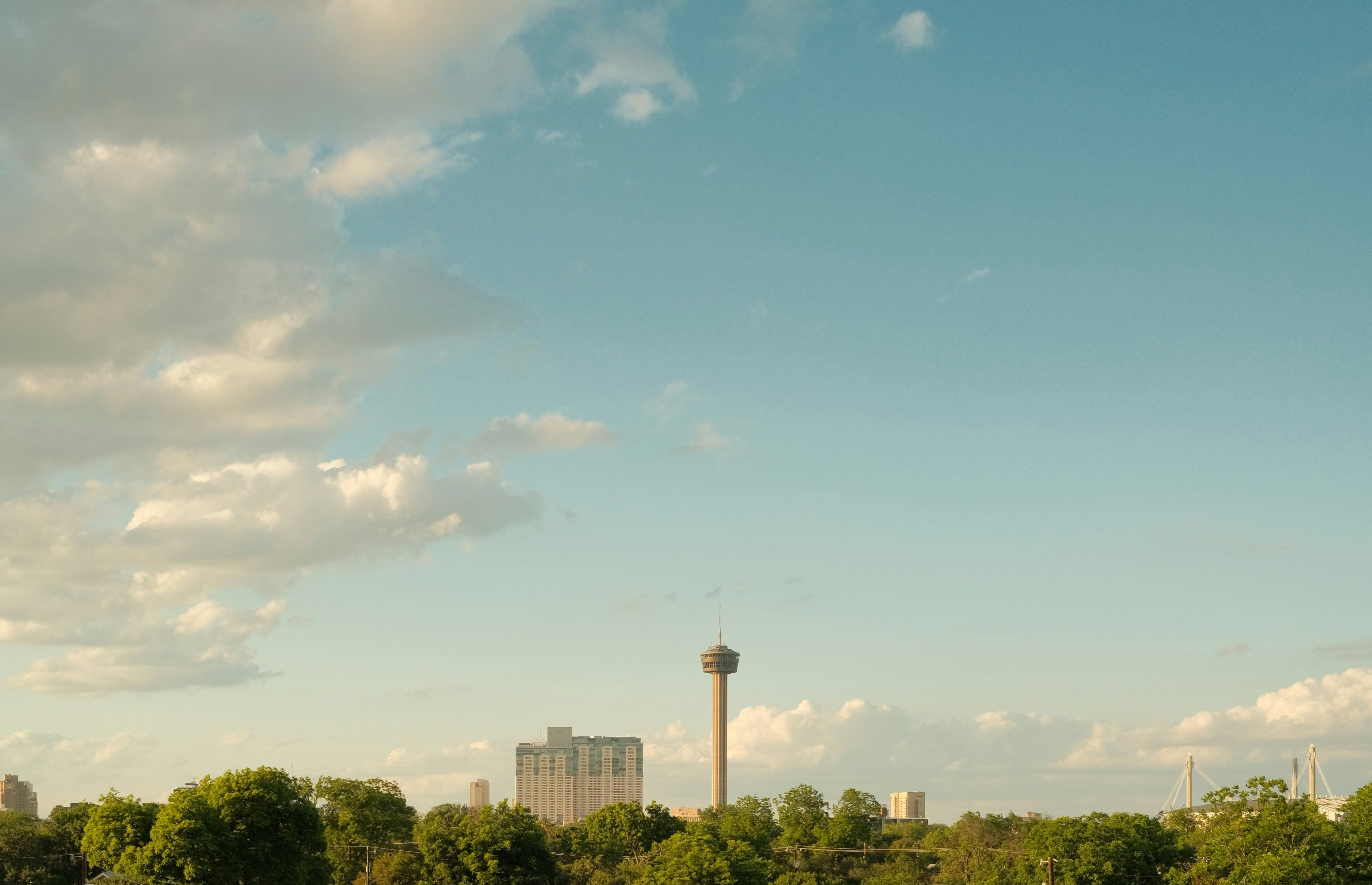
Picture a playoff night at the new downtown arena, sometime in the early 2030s. Eighteen thousand people want to be in their seats by tipoff, on top of everyone already downtown for dinner, a convention or a night on the River Walk.
Where do they all park? A study released this spring found downtown as a whole has sufficient parking today, but around the new entertainment district, demand could outrun supply by as much as 6,000 spaces, especially when events overlap. The city recently dropped an $85 million parking garage and highway connection from its plans for the district, betting instead on changing how people come downtown.
I think that’s a good call. The traditional answer for a city was to build its way out: more lanes, more parking garages, maybe a rail line. In Philadelphia, for example, not only are its stadiums surrounded by a sea of parking; they’re also wrapped by interstates and have their own train stop.
But that infrastructure was built decades ago. Today, building new infrastructure comes with three massive bills: the cost to build it, the cost to maintain it forever, and the disruption while it goes up. Anybody who has driven I-35 in the last several years can add up that last one. The cost to build continues to rise dramatically. California voters approved high-speed rail in 2008 at $33 billion. Eighteen years later, the estimate is past $100 billion, and the first trains through the Central Valley aren’t expected until the 2030s.
Rail, which is again being talked about as a solution to connect Austin and San Antonio, has another problem: a central line doesn’t work without a connecting network. A line between San Antonio and Austin would be the spinal cord, but won’t function without the nerves running off it, the feeder lines and stations that let people get on. How much will that cost? Where will they go? When would they be complete?
And look at where we’re growing. Kendall County, around Boerne, has grown by about 20% since 2020, and Comal County, around New Braunfels, has been among the fastest-growing counties in the country. On Austin’s side, Williamson County, to the north, is adding the most people. The growth is spreading in every direction, and a single line up I-35 won’t answer that need.
Say you live in Boerne and need to be in Austin. If the nearest train station is in Selma, you’ll spend so long driving to Selma that you may as well drive the rest of the way. Now say there’s a short hop from Boerne Stage Airfield to Austin Executive Airport. Nobody has to fight their way onto I- 35 first.
Next generation aircraft that take off and land vertically, or in just a few hundred feet, are being tested in Texas and around the country right now. Several are already in the Federal Aviation Administration’s certification pipeline. One, a four-passenger aircraft that takes off vertically, began the final phase of FAA flight testing this year. Another, a nine-passenger airplane that can take off and land in about 150 feet, already has its certification requirements set. Bigger ones won’t be far behind. All they need is a small landing area and a security line like the one at a theme park. The plane lands, people get on and off like a bus, and it gets up and out quickly, efficiently and flexibly.
If I ran the world, I’d build a short runway near the new arena and run aircraft in and out every few minutes all evening. That won’t move all 18,000 people, but it could move a good chunk of them without putting one more vehicle on the streets.
Cheaper infrastructure and shorter trips are only part of the case. Drive south from downtown and you’re in the country fast. Every truckload of perishables H-E-B drives to one of its small-town stores comes at a cost, and families pay for it in price and selection. Now picture the local store carrying the staples, with everything else ordered online and flown down on demand. H-E-B saves money, and families get better selection at a better price.
So here’s my ask of the people who make these decisions: start thinking about the new stuff before committing staggering amounts of money and time to build more old stuff.
Jim Perschbach is President and CEO of Port San Antonio, which owns and develops Tech Port, a 1,900-acre innovation campus where aerospace, defense, cybersecurity, and other strategic industries grow. Home to more than 80 employers and 19,000 workers, Tech Port generates $20 billion annually in statewide economic impact, including $5.7 billion in disposable personal income. Through its unique mix of industry, military, education, and community assets, Port San Antonio connects growth to opportunities that strengthen San Antonio and the region.
