



Space may be the final frontier, but the foundations are being developed in San Antonio.
Through collaborations among Port San Antonio, Astroport Space Technologies, Inc. and the Southwest Research Institute (SwRI), San Antonio is positioning itself as a hub for space manufacturing and development.
In March, Mayor Gina Ortiz Jones announced the establishment of an Economic Security Advisory Group focused on growing opportunities in artificial intelligence, quantum technology, biotechnology and space manufacturing. While the group is focused on future opportunities, San Antonio has had a space-research and manufacturing presence for more than 30 years.
The space market is very real. The World Economic Forum and McKinsey project that the global space economy will nearly triple to $1.8 trillion by 2035, up from $630 billion in 2023, growing faster than global GDP and, according to them, approaching the scale of the semiconductor industry.
Texas is moving to claim its share. In 2023, the state created the Texas Space Commission and backed it with a $350 million Texas Space Fund for launch, manufacturing, and research. Whether San Antonio captures a meaningful piece of that growth is an open question.
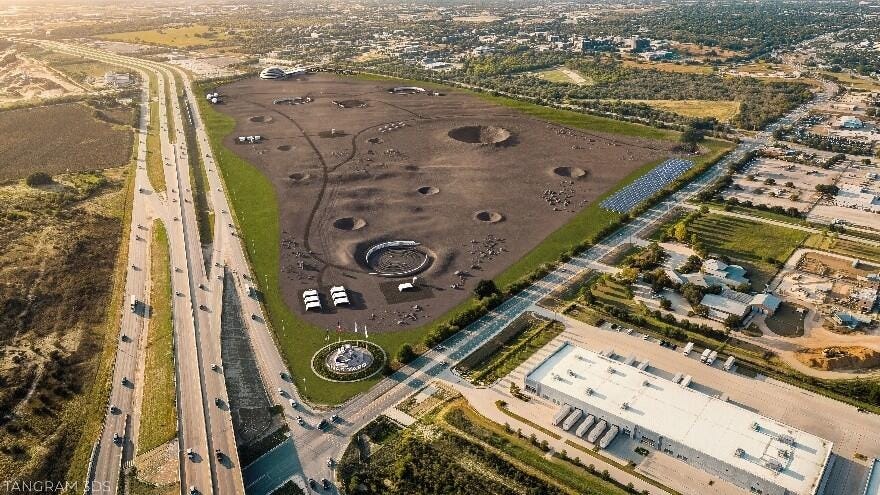
But San Antonio’s push for the space economy is not exactly new. Since the late 1960s, SwRI has contracted with the National Aeronautics and Space Administration (NASA) on research and development projects. Now, a new phase of that work is planned for the SwRI campus. A 180-acre National Lunar Research Center, developed in partnership with Astroport, will serve as a research and simulation hub for lunar missions.
The facility will allow researchers to test machinery and processes on Earth before sending them to the moon in the 2030s. The goal is to support NASA’s plans for sustained exploration near the lunar south pole, part of NASA’s multi-phased effort.
Building towards the Moon
Sam Ximenes, founder and CEO of Astroport, said the company is a subsidiary of Exploration Architecture, which focuses on architecture development for celestial surfaces, including the moon and Mars.
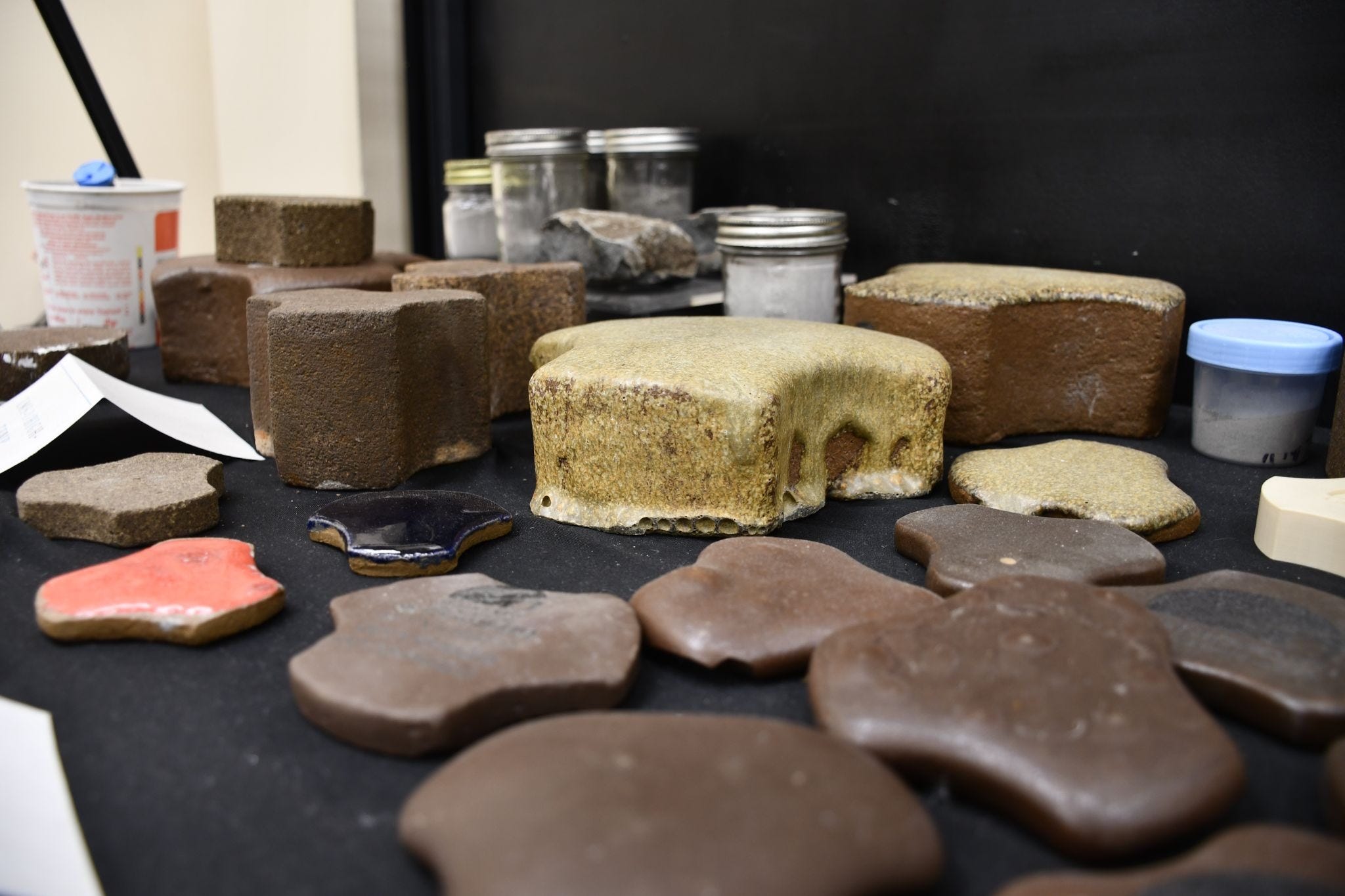
Astroport’s current focus is developing a machine that can turn moon rock and dust, known as regolith, into construction bricks. Rather than transporting bricks from Earth, the company aims to send the machine to the moon and use local materials, reducing the payload that must leave Earth.
“The machine right now is actually a demonstration machine to show that we can make bricks on the moon,” Ximenes said. “Once we prove that, then we start going into the larger construction.”
To simulate lunar regolith, researchers use Earth materials with similar chemical and mechanical compositions and test bricks made from them.
Creating the bricks is only one part of the effort. Researchers and architects must also determine how to lay them efficiently, transport equipment and materials, and address the challenges of operating in a lunar environment.
The National Lunar Research Center will provide a site for that testing. Through partnerships among Astroport, SwRI, the WEX Foundation and other organizations, the simulation facility is planned for construction on the SwRI campus.
Matthew Freeman, space science director at SwRI, said the lunar yard, as the center is known, is expected to be constructed in the next few years to support NASA’s moon-base launches in the 2030s.
The 180-acre site will simulate the moon’s de Gerlache Ridge and the footprint of NASA’s Artemis Base Camp. Machinery designed for lunar missions can be tested there before moving to higher-fidelity facilities for final testing. Because lunar missions will have limited human presence, Freeman said, systems must be capable of operating remotely.
How Port San Antonio is getting involved
One of Port SA’s main advantages in attracting businesses is its ability to self-permit rather than go through the city permitting office.
Earlier this year, Port SA announced that Germany-based Blackwave GmbH plans to open a location at the Port, adding to the number of companies involved in space manufacturing and development.
Jim Perschbach, Port San Antonio’s president and CEO, said Port SA can accelerate development by using its entire development enterprise to get facilities operational. Its ability to self-permit projects, he added, gives companies a significant advantage.
Having these companies on the Port SA campus also creates an ecosystem that encourages collaboration and innovation.
“By bringing these companies here, you have not only the ability to intersect with them in a procurement type of environment, you can buy from each other, but you have that very simple, often overlooked value that you get from clustering. It’s what universities build on and knowledge economies build on,” Perschbach said.
The history of Space in San Antonio
SwRI has been involved in space-related contracts since the Apollo missions in the 1960s.
One notable project is the Cyclone Global Navigation Satellite System (CYGNSS), which launched eight microsatellites in 2016 to improve tropical storm and hurricane forecasting. The mission was initially expected to last about two years but is still operating. The remaining CYGNSS satellites are expected to come down in the next couple of years, Freeman said.
The project also produced an unexpected benefit: researchers discovered that the data could be used to track surface water, soil moisture and other conditions over land.
SwRI is also conducting heliophysics research to study the sun’s effects on machinery and equipment. Unlike Earth, the moon has a limited atmosphere, leaving equipment more exposed to solar radiation.
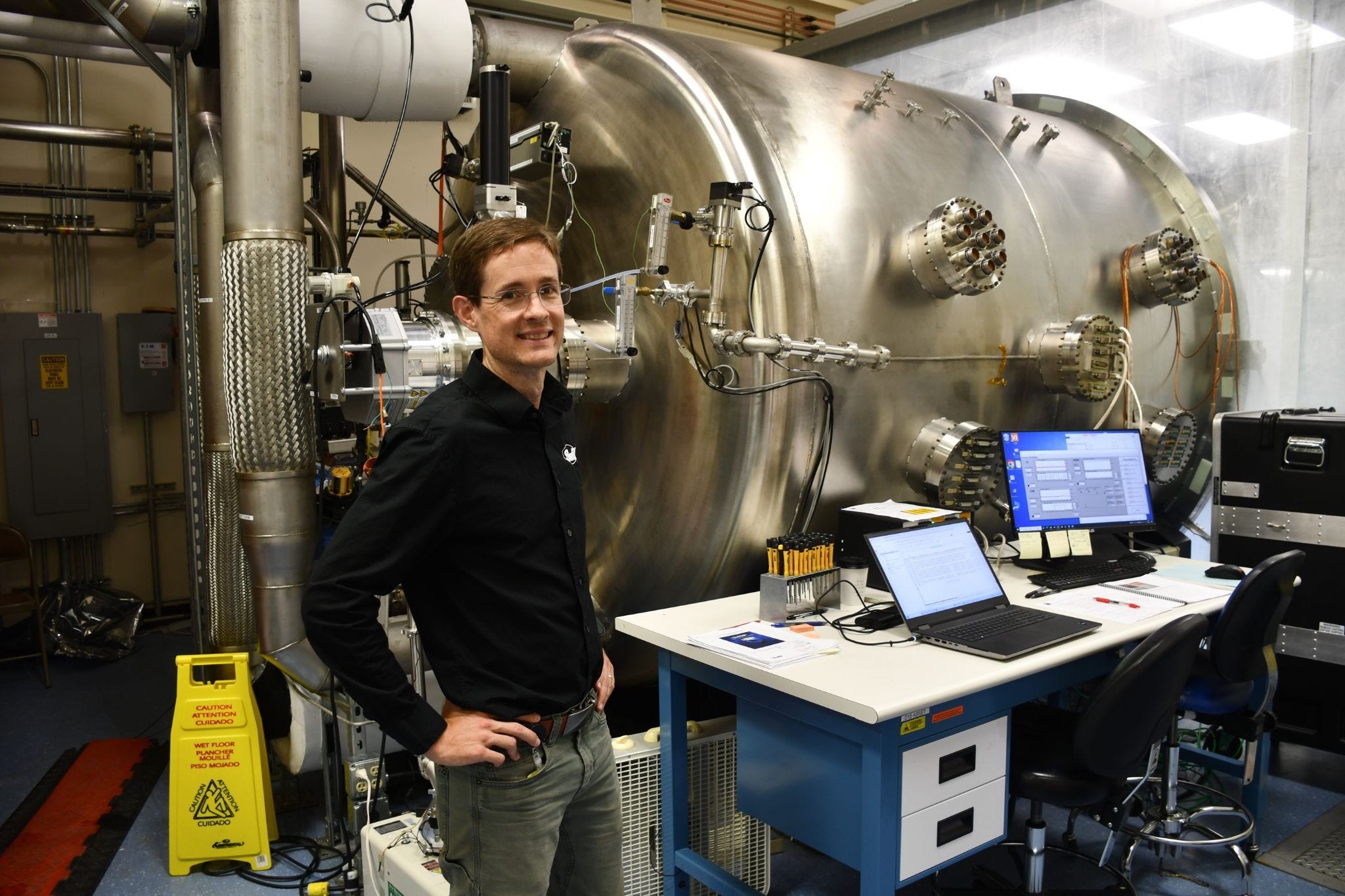
Researchers must also account for rocket vibrations, the vacuum of space and equipment’s ability to operate independently on the lunar surface.
That work extends beyond the moon. SwRI teams are studying other celestial bodies, including Europa and comets, to understand the solar system better and identify potential opportunities for exploration.
Scott Sutherland, space systems manager at SwRI, said the research facility supports larger organizations as a spacecraft vendor and through engineering and data analysis on collaborative projects.
Current research includes a system designed to refuel equipment in orbit and another designed to capture satellites nearing the end of their operational lives, extending their use before moving them to a disposal orbit.
Sutherland described SwRI as a combination of industry and academia, focused on solving complex engineering problems.
The benefits to San Antonio
These collaborations and innovations could advance space technology while attracting additional space manufacturers to the greater San Antonio area. The industry could also help address one of the city’s persistent challenges: attracting more diverse, higher-paying jobs.
Perschbach said San Antonio does not necessarily need to spend hundreds of millions of dollars trying to persuade companies to relocate. Instead, he said, the city can establish itself as a manufacturing hub by building on its existing industrial base and its position in Central Texas.
One advantage is the proximity of Port San Antonio and SwRI to major transportation infrastructure. Port SA can use Kelly Field as an industrial airport, giving companies access to a runway where equipment can be tested without closing airspace in busier parts of the city. That proximity could also make it easier to move equipment from the planned lunar yard to the next stage of development.
The greater:SATX Regional Economic Partnership says San Antonio is one of the three largest aerospace talent hubs in Texas, with more than 46,000 professionals working in aerospace and defense across the city.
“As the world economy evolves, we move into whatever the next generation economy is going to be: knowledge-based, energy-based, everything else. We’re going to need to be able to start getting resources, whether that’s an energy resource, a physical resource, a communications resource or just a commerce resource, utilizing space,” Perschbach said.
Space manufacturing would also build on San Antonio’s existing manufacturing base, potentially giving the city an advantage over other major metropolitan areas.
Freeman said SwRI has capabilities comparable to those of larger research facilities but has lacked the same physical footprint and visibility.
The planned lunar yard could begin to change that. Its scale, combined with access to nearby runways for transporting large equipment, could make the facility more attractive to companies and industry leaders looking to develop and test space technologies.
Spacefaring for the future
The payoff, if San Antonio can capture some of it, would not stop at the moon. Lunar missions are the industry’s immediate priority, but the technologies developed for space tend to find uses on Earth.
Perschbach pointed to spinoffs of past NASA research, including water purification systems, phone cameras and portable computers, and to what may follow. Energy is another possibility; he raised the prospect of large solar arrays collecting power in orbit and beaming it back to Earth.
So far, though, San Antonio’s record in the space industry is mixed. The Texas Space Commission has handed out grant after grant from the first $150 million of its space fund: to Houston companies such as Intuitive Machines, Starlab and Axiom; to Cedar Park’s Firefly Aerospace and other Austin-corridor firms; to Blue Origin in Van Horn and SpaceX in Brownsville; even to regional planning councils in El Paso, Midland and Abilene. Not one award has gone to a San Antonio recipient. Asked about it in late 2025, the commission’s executive director, Norman Garza, acknowledged that “none of the grantees were from San Antonio, but there were plenty of applications from the area.”
Despite this, San Antonio has landed the state’s first Texas Space Summit, which the Greater San Antonio Chamber was set to host this September at the Henry B. González Convention Center. Earlier this summer, the chamber postponed it to 2027, with its CEO saying the program wasn’t yet where he wanted it.
Still, the most promising signs are local and recent. Blackwave chose Port San Antonio for its first U.S. factory and expects to build toward roughly 250 jobs making pressure vessels for rockets and satellites. At SwRI, the planned National Lunar Research Center would give engineers a place to test the technologies needed to build a lunar base before those systems ever leave Earth. Neither project puts San Antonio in competition with Houston’s Johnson Space Center or Austin-area rocket companies, but both suggest the city may finally be turning its decades of space research into something larger.
“Even though we’ve been in space since Apollo, we’re one of the best-kept secrets, and that’s really unfortunate,” Freeman said.
For San Antonio, the challenge now is not establishing a presence in the space industry—it has had one for decades. The challenge is turning that history, along with its research capabilities, manufacturing base and infrastructure, into a larger role in the industry’s future.